
Strength Training for Runners: Prevent Injuries & Run Longer
Why Strength Training for Runners is Essential
Many runners believe that improving performance simply means running more miles. While mileage builds endurance, running alone does not develop all the physical qualities needed for long-term performance and injury prevention.
Strength training plays a critical role in helping runners stay healthy, improve running efficiency, and maintain performance over time.
Research consistently shows that runners who incorporate strength training into their routines experience lower injury rates and improved running economy. Strong muscles help absorb impact forces, stabilize joints, and maintain proper running mechanics throughout a run.
For runners who want to train consistently and stay injury-free, strength training is not optional; it is essential.
Why Running Alone Is Not Enough
Running is a repetitive activity that places two to three times bodyweight through the legs with every step. Over time, this repeated stress can lead to fatigue and overuse injuries if the body is not strong enough to tolerate the load.
Without strength training, runners may experience:
Muscle imbalances
Reduced stability in the hips and core
Decreased power and stride efficiency
Increased injury risk
These issues often contribute to common running injuries such as:
IT band syndrome
Strength training helps counter these issues by building resilience in the muscles and connective tissues that support running.
The Physiological Benefits of Strength Training
Strength training improves several physical qualities that directly affect running performance.
Increased Muscle Strength and Power
Strong muscles generate more force with each stride. This helps runners maintain speed and efficiency, particularly on hills, during intervals, and in the late stages of races.
Improved Running Economy
Running economy refers to how efficiently the body uses oxygen at a given pace. Studies have shown that strength training can improve running economy by enhancing neuromuscular coordination and muscle stiffness.
This means runners can maintain the same pace while using less energy.
Better Shock Absorption
Strengthening the glutes, calves, and quadriceps helps absorb impact forces that occur during running. This reduces stress on joints and bones.
Reduced Injury Risk
A systematic review published in the British Journal of Sports Medicine found that strength training programs can reduce the risk of sports injuries by up to 66%. Stronger muscles provide better joint stability and reduce excessive strain on tendons and ligaments.
Key Muscles Runners Should Strengthen
To be most effective, strength training for runners should target the muscle groups most involved in running.
Glutes: The Primary Power Source
The glute muscles are responsible for hip extension and propulsion during running. Weak glutes often lead to compensation in the knees and lower legs.
Strengthening the glutes can help reduce the risk of:
IT band syndrome
Exercises include:
Glute bridges
Step-ups
Single-leg squats
Hip thrusts
Calves: Essential for Propulsion
The calf muscles absorb impact forces and help push the body forward during running.
Weak calves can contribute to injuries such as Achilles tendinopathy and plantar fasciitis.
Effective exercises include:
Calf raises
Eccentric heel drops
Single-leg calf raises
Hamstrings: Stride Control
The hamstrings help decelerate the leg during the swing phase of running and contribute to propulsion.
Exercises include:
Romanian deadlifts
Single-leg deadlifts
Hamstring bridges
Core: The Foundation of Efficient Running
The core stabilizes the pelvis and trunk, allowing the legs to move efficiently.
A weak core can lead to excessive trunk movement and inefficient running mechanics.
Exercises include:
Planks
Side planks
Bird-dog exercises
Pallof press
Upper Body: Supporting Arm Drive and Posture
While running primarily relies on the lower body, the upper body contributes to posture and rhythm.
Strengthening the upper body can help improve arm drive and reduce fatigue during longer runs.
Exercises include:
Push-ups
Rows
Shoulder presses
Why Single-Leg Exercises Matter for Runners
Running is a single-leg activity, meaning one foot is on the ground at a time.
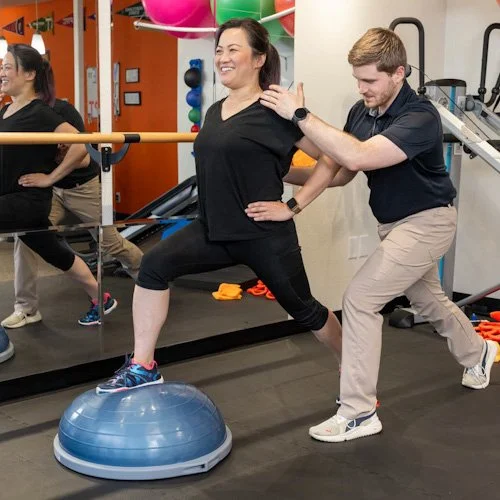
Unilateral exercises help mimic this movement pattern while improving balance and stability.
Examples include:
Single-leg squats
Lunges
Step-ups
Single-leg deadlifts
These exercises help correct side-to-side strength imbalances that often contribute to injury.
Plyometrics: Developing Power and Efficiency
Plyometric exercises train the muscles to produce force quickly. These movements use the stretch-shortening cycle to develop explosive power.
Examples include:
Squat jumps
Box jumps
Bounding drills
When performed correctly, plyometrics can improve running efficiency and stride power. However, they should be introduced gradually and only after developing a foundation of strength.
How to Integrate Strength Training With Running
Strength training should complement running rather than interfere with it.
General recommendations include:
Performing strength training after easy runs or on non-running days
Avoiding heavy strength sessions before key workouts or long runs
Reducing strength training volume during peak race preparation
This balanced approach allows runners to gain strength without compromising recovery.
How Often Should Runners Strength Train?
Most runners benefit from two to three strength sessions per week.
Full-body workouts are typically the most efficient approach.
A typical session may include:
One lower-body strength exercise
One unilateral leg exercise
One core exercise
One upper body exercise
Optional plyometric drills
These sessions usually take 20–40 minutes and can be performed on easy running days.
Recovery Matters
Strength gains occur during recovery, not during the workout itself.
Runners should prioritize:
Adequate sleep
Proper nutrition
Hydration
Rest days when needed
Active recovery activities such as cycling or swimming can also support recovery while maintaining cardiovascular fitness.
Strong Runners Stay Healthy
Strength training is one of the most effective tools runners can use to stay healthy, improve performance, and reduce injury risk.
By building strength in the hips, legs, and core, runners improve their ability to absorb impact forces and maintain efficient running mechanics.
The goal is not to replace running, but to support it.
A consistent strength training routine helps runners:
Improve running economy
Maintain long-term performance
Continue enjoying the sport for years to come.
Click here to book an evaluation or running assessment online.
-
Yes. Strength training helps runners build stronger muscles, improve running efficiency, and reduce injury risk. Running alone does not strengthen all the muscles needed to support proper running mechanics, particularly the glutes, core, and stabilizing muscles.
-
Most runners benefit from two to three strength training sessions per week. These sessions do not need to be long, 20 to 40 minutes of targeted strength exercises can significantly improve running performance and resilience.
-
Effective exercises for runners typically include movements that strengthen the hips, legs, and core. Examples include:
Squats
Lunges
Single-leg deadlifts
Calf raises
Glute bridges
Planks
These exercises help improve stability, power, and running mechanics.
-
Strength training for runners does not always require heavy weights. Many runners benefit from moderate resistance and single-leg exercises that improve strength, balance, and coordination. Proper form and gradual progression are more important than lifting the heaviest weight possible.
-
Yes. Strength training improves muscle strength, joint stability, and shock absorption. Research has shown that structured strength programs can significantly reduce the risk of sports injuries, particularly overuse injuries common in runners.
-
Strength training can be performed on easy running days or non-running days. It is usually best to avoid heavy strength sessions immediately before hard workouts or long runs to allow proper recovery.
