Tualatin Valley Physical Therapy, LLC BBB Business Review

Shoulder Pain Physical Therapy in Hillsboro, OR

Move freely. Lift confidently. Use your shoulder without hesitation.

Shoulder Pain Making Sleep, Workouts, or Daily Life Difficult?

An irritated shoulder can make reaching overhead, lifting weights, sleeping comfortably, or even getting dressed frustrating.

At Tualatin Valley Physical Therapy, we help identify the real cause of your shoulder discomfort and create a personalized recovery plan.

Dr. Ben explains what impairments may be present with shoulder pain and how to address them during a free consultation at an outdoor event.

A Painful Shoulder Doesn’t Have to Be Your New Normal

A painful shoulder can make simple tasks like sleeping, reaching overhead, or carrying groceries feel overwhelming. It can also prevent you from working, lifting, throwing, or training the way you want. Whether symptoms developed gradually or began after a specific event, such as a car accident, shoulder discomfort often responds extremely well to targeted physical therapy.

At Tualatin Valley Physical Therapy (TVPT), we help patients throughout Hillsboro and the Tualatin Valley reduce pain, restore strength, and rebuild confidence in their shoulders. With our boutique model‍ ‍approach to shoulder rehab, we offer a true one-on-one experience where you get a full hour with a Doctor of Physical Therapy‍ ‍(DPT) to understand what’s going on, calm symptoms, and rebuild meaningful strength.

Most importantly: We focus on restoring function, not chasing diagnoses.

Pain in Your Shoulder is Common, but Often Treatable

Many people assume pain means:

  • “I’m getting old.”

  • “I tore something.”

  • “I should stop exercising.”

  • “It will go away eventually.”

Sometimes rest helps temporarily.

But when shoulder pain lingers, keeps returning, or limits activity, there is usually an underlying issue that can be addressed.

Most shoulder irritation improves when treatment focuses on the right combination of mobility, strength, control, and smart progression.

Diagram of shoulder injuries with anatomy. Treat shoulder pain with physical therapy in Hillsboro, OR

Common Causes of Pain in Your Shoulders

Shoulder pain may be related to:

  • Rotator cuff irritation

  • Tendon overload

  • Movement-related impingement

  • Joint stiffness

  • Frozen shoulder

  • Poor shoulder blade control

  • Weakness after inactivity

  • Gym overuse

  • Postural overload

  • Post-surgical weakness

  • Returning too quickly after injury

Many cases are multifactorial, which is why personalized care matters.

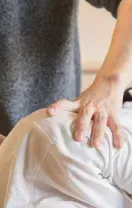
A physical therapist mobilizing a patient's shoulder for shoulder injury rehab in Hillsboro, OR

Common Symptoms of a Painful Shoulder

Shoulder problems often cause:

  • Pain lifting the arm overhead

  • Pain reaching behind your back

  • Pain sleeping on one side

  • Pain during bench press or pressing exercises

  • Weakness in lifting objects

  • Clicking or catching sensations

  • Stiffness

  • Pain throwing or swinging

  • Difficulty getting dressed

  • Pain carrying children or groceries

Common causes of shoulder pain. Shoulder pain recovery in Hillsboro, OR.

Which Type of Shoulder Pain Do You Have?

Pain Lifting Overhead

Often related to rotator cuff irritation, strength deficits, or movement control problems.

➡️ See Rotator Cuff Pain Treatment

Sharp Pain Reaching or Pressing

Often related to movement-related impingement or irritated tissues.

➡️ See Shoulder Impingement Treatment

Pain During Bench Press or Gym Training

Often related to overload, mechanics, mobility, or tendon irritation.

➡️ See Shoulder Pain From Bench Press

Progressive Stiffness

Often related to mobility restriction or frozen shoulder patterns.

➡️ See Adhesive Capsulitis (Frozen Shoulder)

Common Shoulder Conditions We Treat

We frequently work with:

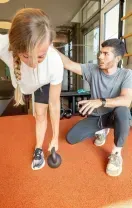
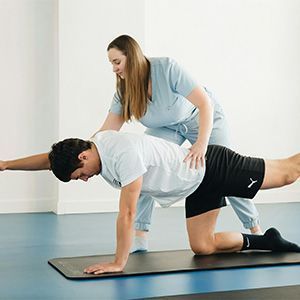
A male physical therapist examining and adjusting the shoulder of a woman who is in a quadruped position performing a scapular stability exercise for shoulder pain. They are in an office with anatomical posters on the wall.
Dr. Ben analyzes a patient's scapular movement while performing a shoulder exercise on a foam roll at TVPT.

Who We Commonly See for Shoulder Rehab

We work with:

Whether your goal is pain relief or performance, care is always individualized.

Many Shoulder Issues Involve:

✔ Strength imbalances
✔ Load tolerance deficits
✔ Mobility restrictions
✔ Movement coordination changes
✔ Tendon sensitivity

Not simply “damage.”

Shoulder rehab is ideal for patients who:

  • Lift or work overhead

  • Train or participate in sports

  • Perform manual or repetitive work

  • Want to regain confidence in movement

We design treatment around what matters most to you, whether that’s work, sport, lifting, or daily life.

A man in a gym grabs his shoulder in pain after a bad lift. He would be an excellent candidate for our shoulder rehab program.
TVPT's unofficial mascot, Winston, points out common tissue imbalances that alter scapular mechanisms and cause shoulder pain

Rotator Cuff Tears Are Often Misunderstood

Hearing “tear” can feel alarming, but context matters.

Research consistently shows:

👉 Many rotator cuff tears are painless
👉 Imaging findings often do not predict symptoms
👉 Strength & loading capacity matter more than structure
👉 Conservative rehab is highly effective

Pain does not automatically equal severity.

Your shoulder is adaptable and trainable.

Why Shoulder Irritation Often Becomes Recurring

Many people rely on temporary strategies:

  • Rest

  • Injections

  • Passive treatment only

    • Massage, stretching, adjustments

  • Activity avoidance

Long-term improvement usually occurs when:

✔ Strength capacity improves
✔ Load tolerance increases
✔ Mechanics normalize
✔ Movement fear decreases
✔ Confidence returns

This is where targeted PT with proper patient education excels.

An image depicting the subscapularis and supraspinatus muscles of the rotator cuff along with associated skeletal anatomy.

Our Shoulder Rehab Approach

Instead of relying solely on passive care, we combine hands-on treatment with progressive strengthening and education. The goal is not just pain relief, but long-term resilience to restore confidence in how your shoulder moves and performs.

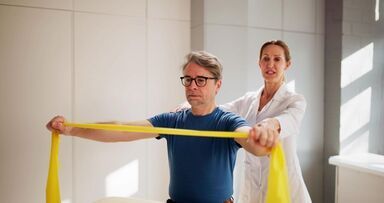
A physical therapist guides a patient through a shoulder stability exercise (arm bar).
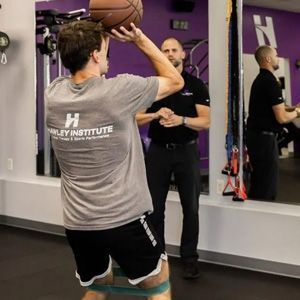
A woman participating in a functional movement screen exercise while a trainer assists her with a resistance band during an exercise for shoulder pain, in an indoor gym or therapy setting.
  • Thorough Assessment

    • Detailed History & Testing

      • We discuss your pain, triggers, and goals, and test motion, strength, and irritability.

      • We assess posture, range of motion, strength, and shoulder blade motor control to understand the full picture

    • Clear Diagnosis & Plan

      • We use tissue-specific testing so we can get to the root of the problem and give you an accurate diagnosis

      • You’ll understand what’s driving your pain and what steps we’ll take to improve it.

  • Manual Therapy

    • Hands-on care, such as soft tissue work, joint mobilizations, and neuromuscular facilitation, may be used to reduce pain and improve movement.

  • Progressive Rehab

    • Targeted exercises for the rotator cuff, shoulder blades, and upper back help restore strength and control

    • We blend mobility work, strengthening, and control exercises based on your tolerance

  • Activity & Sport Integration

    • We help you safely return to your job, sport, or lifting routine with a graded and confidence-building plan.

  • Long-Term Plan

    • You’ll leave with clear strategies to keep your shoulder strong and resilient going forward.

Irritated Shoulder Treatment for Active Adults in Hillsboro, OR

Shoulder injuries can interfere with:

  • Bench press

  • Overhead press

  • Pull-ups

  • Pickleball/tennis

  • Parenting tasks

  • Work duties

  • Sleep

  • Hiking/recreation

  • Yard work

  • Daily confidence

We help active adults stay moving while recovering.

Advanced Options for Persistent Shoulder Discomfort

Some shoulder cases improve with exercise-based rehab alone.

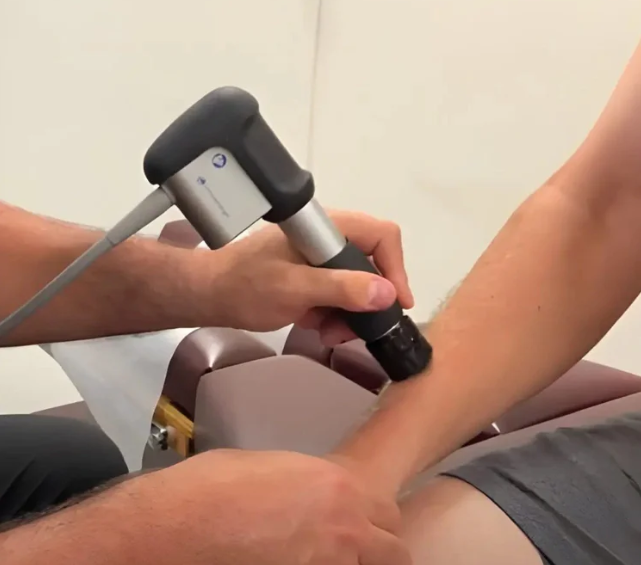
Persistent cases may benefit from adjunctive tools, such as Shockwave Therapy (SWT) and High-Intensity Laser Therapy (HILT) when traditional care has not resolved symptoms, as part of a comprehensive rehab program.

At Tualatin Valley Physical Therapy, we offer:

High-Intensity Laser Therapy

High-Intensity Laser Therapy uses light energy to stimulate cellular repair and reduce inflammation.

Laser therapy may help:

  • Reduce pain

  • Improve circulation

  • Accelerate tissue healing

  • Tolerate loading earlier

Learn more about Laser Therapy →

Compared with prolonged pain, repeated injections, imaging costs, or delayed recovery, ESWT and HILT are designed as focused interventions to accelerate tissue adaptation.

Recovery Expectations

✔ Load progression required
✔ Temporary discomfort is normal
✔ Capacity rebuilding is the goal

Shockwave Therapy

Shockwave Therapy uses acoustic pressure waves to stimulate healing in chronic muscle, tendon, and ligament injuries.

Research suggests shockwave therapy can help:

  • Increase blood flow

  • Stimulate collagen production

  • Restart stalled healing processes

Learn more about Shockwave Therapy →

High-intensity laser therapy for shoulder impingement treatment in Hillsboro, OR
A photo of a patient receiving shockwave therapy for shoulder impingement treatment in Hillsboro, OR

When To Get Help for Shoulder Injuries

Consider physical therapy if:

  • Pain lasts more than 1–2 weeks

  • Lifting hurts

  • Sleep is disrupted

  • Workouts are limited

  • Motion is decreasing

  • Symptoms keep returning

  • You feel weaker

Earlier treatment often means easier recovery.

Painful Shoulder Physical Therapy in Hillsboro, OR

If you are searching for:

  • Shoulder injury treatment Hillsboro

  • Physical therapy for shoulder discomfort

  • Rotator cuff treatment near me

  • Pain lifting arm Hillsboro

  • Shoulder hurts from gym workouts

Tualatin Valley Physical Therapy provides personalized one-on-one care designed to help you recover and move confidently again.

Let’s Get Your Shoulder Moving Again

You do not need to keep guessing or avoiding the activities you enjoy. If you’re ready to sleep, lift, reach, and train with less pain, we’re here to help.

Frequently Asked Questions About Shoulder Injuries

  • Shoulder pain can come from tendon irritation, rotator cuff overload, stiffness, instability, or training and work demands. A PT evaluation helps identify the most likely drivers and the best plan.

  • Yes! Physical therapy improves strength, mobility, load tolerance, and movement mechanics, which are central to shoulder recovery.

  • Short-term modification may help, but many cases improve best with guided movement and strengthening.

  • We treat rotator cuff tears, impingement, tendinopathy, labral injuries, frozen shoulder, instability, and pre-/post-surgical cases.

  • Not typically. At TVPT, we don’t want you to stop exercising. Instead, we implement modifications to your training and pair them with the progressive loading done in the clinic.

  • Absolutely! Rehab focuses on mobility, progressive loading, stability, and movement restoration to maximize proper motor control and reduce tissue imbalances.

  • No! The term “tear” is often misleading, as many can still use their shoulder even with pain. Many shoulder problems improve with a well-structured rehab plan. If symptoms suggest imaging is important, we can help you decide the best next step, including referring you to an orthopedic surgeon.

  • Often due to strength, movement coordination, or load tolerance deficits rather than structural damage. Many people have shoulder tissue and movement imbalances, but rarely train their scapular stabilizers properly.

  • Timelines vary by diagnosis and activity demands. Many people notice meaningful improvement within 6-8 visits, while full strength and return to sport often take longer, depending on the situation.

  • Absolutely! Gym injuries are commonly seen in physical therapy, where we address the root causes and emphasize proper muscle activation along with form.

  • Sleeping pain may be related to tissue sensitivity, position, or underlying irritation.

  • If pain persists, returns, limits movement, disrupts sleep, or affects work and exercise.

Stop Waiting. Start Recovering.

No referrals. No insurance delays. No techs or aides.
Just one-on-one care with a Doctor of Physical Therapy.

Whether you’re dealing with back pain, a sports injury, an auto accident, or a work injury, we make it simple to get started. Same-day appointments available.

Serving Hillsboro, Cornelius, Forest Grove, Aloha, and the greater Tualatin Valley.

Call us today at (971) 238-5755, or click the button below to schedule your initial evaluation online.

Unsure if self-pay physical therapy is for you? Schedule a free 15-minute consultation using the same button!

Our friendly team is ready to guide you on your path to recovery and lasting wellness.

Auto (PIP) Accepted

〰️

Workers' Compensation Accepted

〰️

Out-of-Network Reimbursement Available

〰️

Auto (PIP) Accepted 〰️ Workers' Compensation Accepted 〰️ Out-of-Network Reimbursement Available 〰️

Transparent pricing. Clear plan. No surprise bills.

Experience the TVPT Difference.