


Achilles Tendinopathy Physical Therapy in Hillsboro, OR
Holistic • Evidence-Based • Performance Rehab
Achilles tendon pain can make walking, running, lifting, and jumping uncomfortable or unpredictable. Many people experience morning stiffness, pain during activity, or a frustrating cycle in which symptoms subside briefly but flare up again when training resumes.
At Tualatin Valley Physical Therapy, Achilles tendinopathy treatment focuses on restoring the tendon’s ability to handle load safely and progressively. The goal is not just short-term relief but rebuilding the strength and tolerance needed for walking, running, training, and daily activity.
You’ll receive 1-on-1 care from a Doctor of Physical Therapy, with treatment tailored to your activity level and goals.
Common Achilles Problems We Treat
Mid-Portion Achilles Tendon Pain
Pain located an inch or two above the heel bone, often associated with:
Running or jumping activity
Stiffness after inactivity
Soreness during or after workouts
Insertional Achilles Tendon Pain
Pain near where the tendon attaches to the heel bone, often aggravated by:
Hills or uphill running
Deep ankle bending
Pressure from shoes
Overload From Training Changes
Achilles pain frequently appears after:
Sudden increases in running or walking volume
Changes in footwear
Increased plyometrics or jumping
Returning to activity too quickly after time off
Persistent or Recurring Achilles Pain
If symptoms keep returning, the tendon often hasn’t rebuilt the strength and load tolerance required for your activity level.
Why Achilles Tendinopathy Happens
Tendinopathy usually develops when repetitive loading exceeds the tendon’s capacity to recover.
Contributing factors can include:
Rapid increases in activity or training volume
Insufficient calf strength or endurance
Ankle mobility limitations
Changes in footwear or running mechanics
Impaired foot intrinsic muscle activation
Prolonged standing or repetitive loading
Returning to sport too quickly after injury
The key to recovery is improving the tendon’s ability to handle load safely and progressively again.
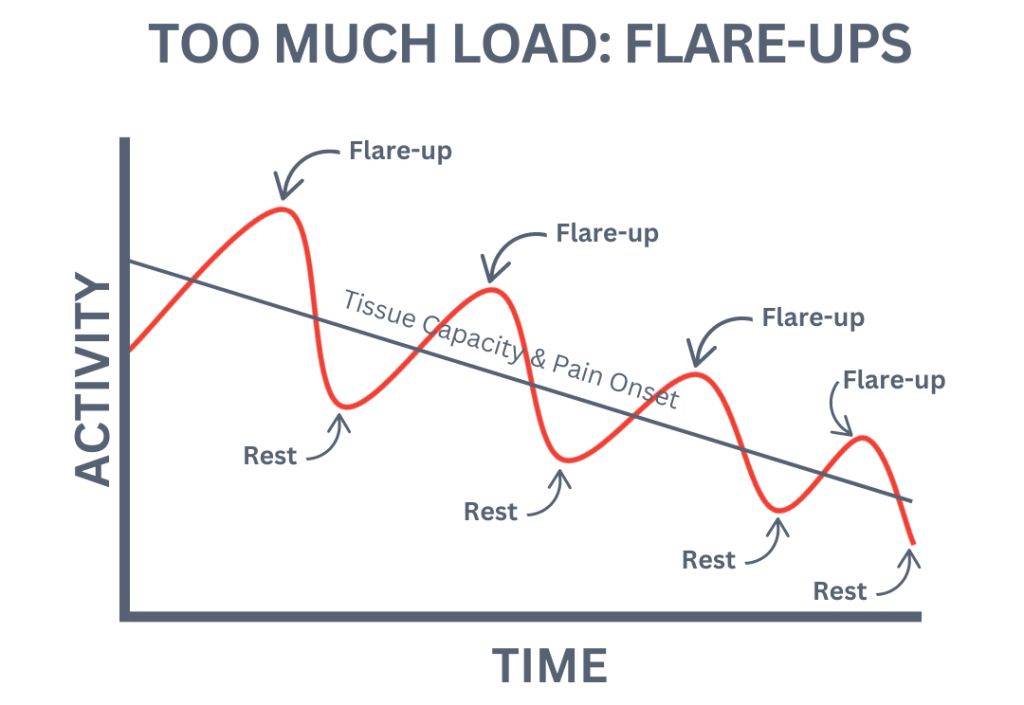
Why Achilles Pain Persists
Tendinopathy describes a tendon that has become sensitive, irritated, and poorly tolerant to load.
Common patterns:
Rest → feels better
Return to activity → pain returns
Because capacity wasn’t rebuilt.
Tendon rehab typically involves issues of load tolerance and tissue capacity. It is a progression problem, not just a pain problem.
Our Treatment Approach
Identify the True Drivers of the Problem
Your evaluation looks at:
Symptom pattern and irritability
Calf strength and endurance
Tissue extensibility
Ankle mobility
Movement patterns during walking or running
Training demands and workload
We identify what the tendon currently tolerates and what is causing the pain.
Then progress systematically, using the entire kinetic chain, not just the ankle, so we address the root cause, not just the symptoms.
Calm Symptoms Without Unnecessary Rest
We help you understand:
What activities are safe to continue
How to modify load during recovery
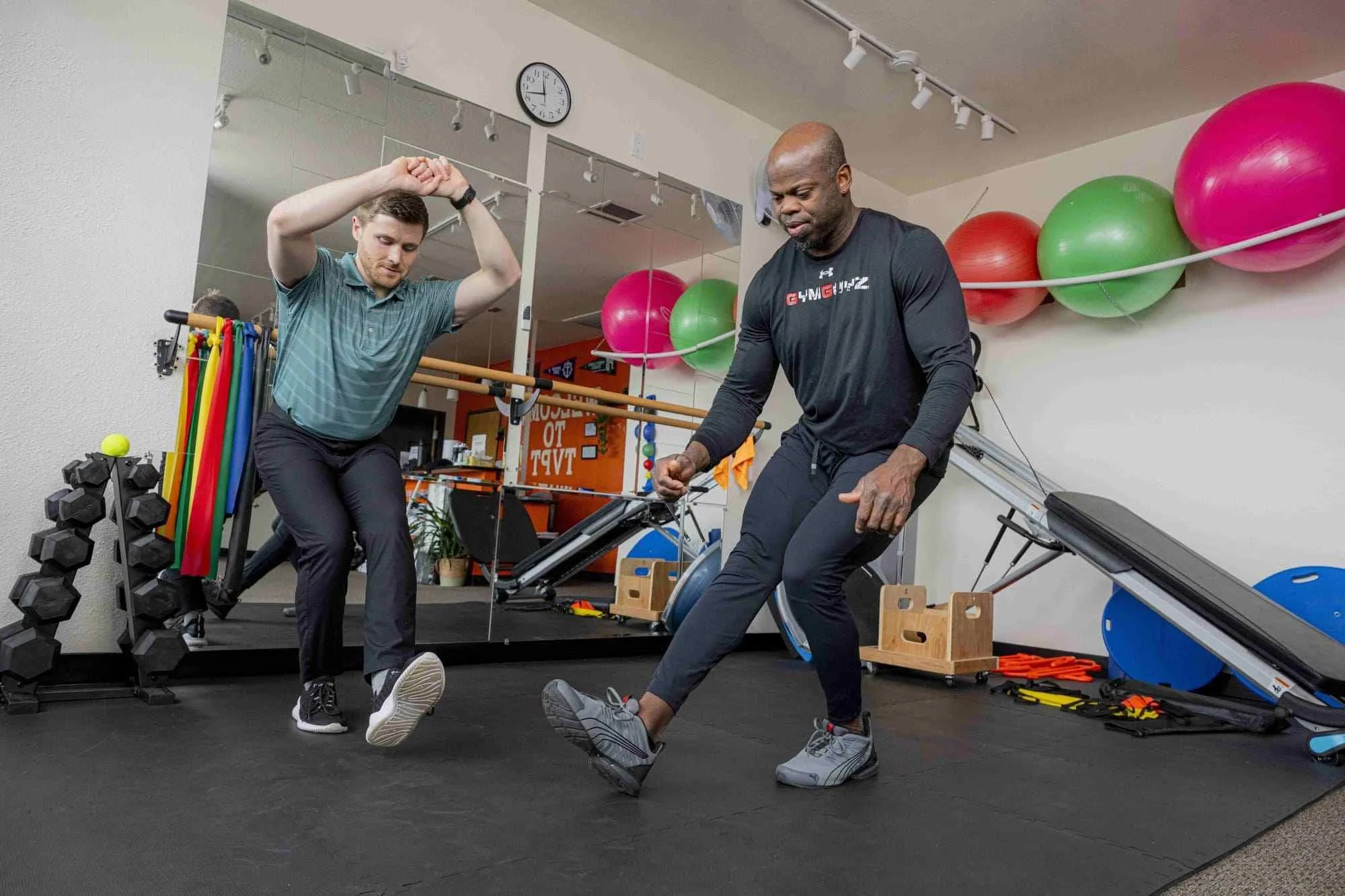
What to do during flare-ups
Expected Recovery Pattern
✔ Gradual load exposure
✔ Temporary symptom fluctuation is normal
✔ Strength progression essential
We rebuild durability, not just comfort, to make you anti-fragile so your pain doesn’t keep returning.
End the cycle of pain and keep doing what you love without hesitation.
Are you ready to reduce pain, rebuild tendon strength, and return to running and activity with confidence?

Rebuild Tendon Strength and Tolerance
Treatment may include:
Progressive calf strengthening
Tendon loading programs
Ankle mobility work when appropriate
Gait and running mechanics review
Return-to-running or return-to-sport progressions
Return to Activity With Confidence
Whether your goal is to:
Lift comfortably
Hike or walk long distances
Stay active without recurring flare-ups
Your plan will focus on building the capacity needed for those demands.
Options for Persistent Achilles Tendon Pain
For stubborn tendon symptoms, additional options may be appropriate alongside progressive rehab:
Shockwave Therapy (ESWT) to support tendon remodeling
High-Intensity Laser Therapy to assist with pain modulation and recovery
These are considered in light of your presentation and are paired with structured rehabilitation.
What to Expect at Your First Visit
Your evaluation includes:
1-on-1 assessment with a Doctor of Physical Therapy
Strength and tendon capacity testing
Ankle mobility assessment
Walking or running analysis when relevant
A clear plan of care with progressive loading targets
Exercises tailored to your activity level
Achilles Tendon Pain FAQs
-
Most people notice stiffness in the tendon, especially in the morning or after rest. Pain may occur during activity, such as running or jumping, and sometimes worsens after exercise.
-
Recovery time varies. Many people improve over several weeks to a few months, depending on symptom severity, symptom duration, and how consistently strengthening and load progression are followed.
-
A common pattern is temporary symptom relief with rest, followed by recurrence upon resuming activity. This often reflects a capacity and progression problem where the tendon’s load tolerance hasn’t been rebuilt.
-
Not always. Many people can continue running with modifications to intensity, volume, or frequency while rebuilding tendon capacity.
-
Stretching alone is usually not sufficient. Progressive strengthening and tendon loading programs are typically the most important part of recovery.
-
Exercises that progressively strengthen the calf muscles and load the tendon are commonly used. The exact program depends on the type of Achilles tendinopathy and symptom irritability.
-
If symptoms persist for more than a couple of weeks, worsen with activity, or recur when you increase training or walking, a physical therapy evaluation can help identify the underlying causes.
Stop Waiting. Start Recovering.
No referrals. No insurance delays. No techs or aides.
Just one-on-one care with a Doctor of Physical Therapy.
Whether you’re dealing with back pain, a sports injury, an auto accident, or a work injury, we make it simple to get started. Same-day appointments available.
Serving Hillsboro, Cornelius, Forest Grove, Aloha, and the greater Tualatin Valley.
Call us today at (971) 238-5755, or click the button below to schedule your initial evaluation online.
Unsure if self-pay physical therapy is for you? Schedule a free 15-minute consultation using the same button!
Our friendly team is ready to guide you on your path to recovery and lasting wellness.
Auto (PIP) Accepted
〰️
Workers' Compensation Accepted
〰️
Out-of-Network Reimbursement Available
〰️
Auto (PIP) Accepted 〰️ Workers' Compensation Accepted 〰️ Out-of-Network Reimbursement Available 〰️
Transparent pricing. Clear plan. No surprise bills.
Experience the TVPT Difference.