


Deal with that Pesky Elbow Pain with Expert-Led Rehab
Find the Cause. Fix the Problem. Get Back to Life Without Guessing.
Elbow pain can stop you from training, working, sleeping, and even doing basic daily tasks like gripping a mug, typing, or lifting a bag. Whether your pain started gradually (classic overuse) or suddenly (a strain, a fall, or a flare), the right plan is usually not “rest forever”; it’s the right combination of load management, building tissue capacity, mobility work, and technique correction.
At Tualatin Valley Physical Therapy, you get 1-on-1 care with a Doctor of Physical Therapy. No handoffs, no rushed visits, and a plan built around your goals.
Whether your pain is on the inside or outside of the elbow, we help identify the real cause and build a clear plan to help you recover.
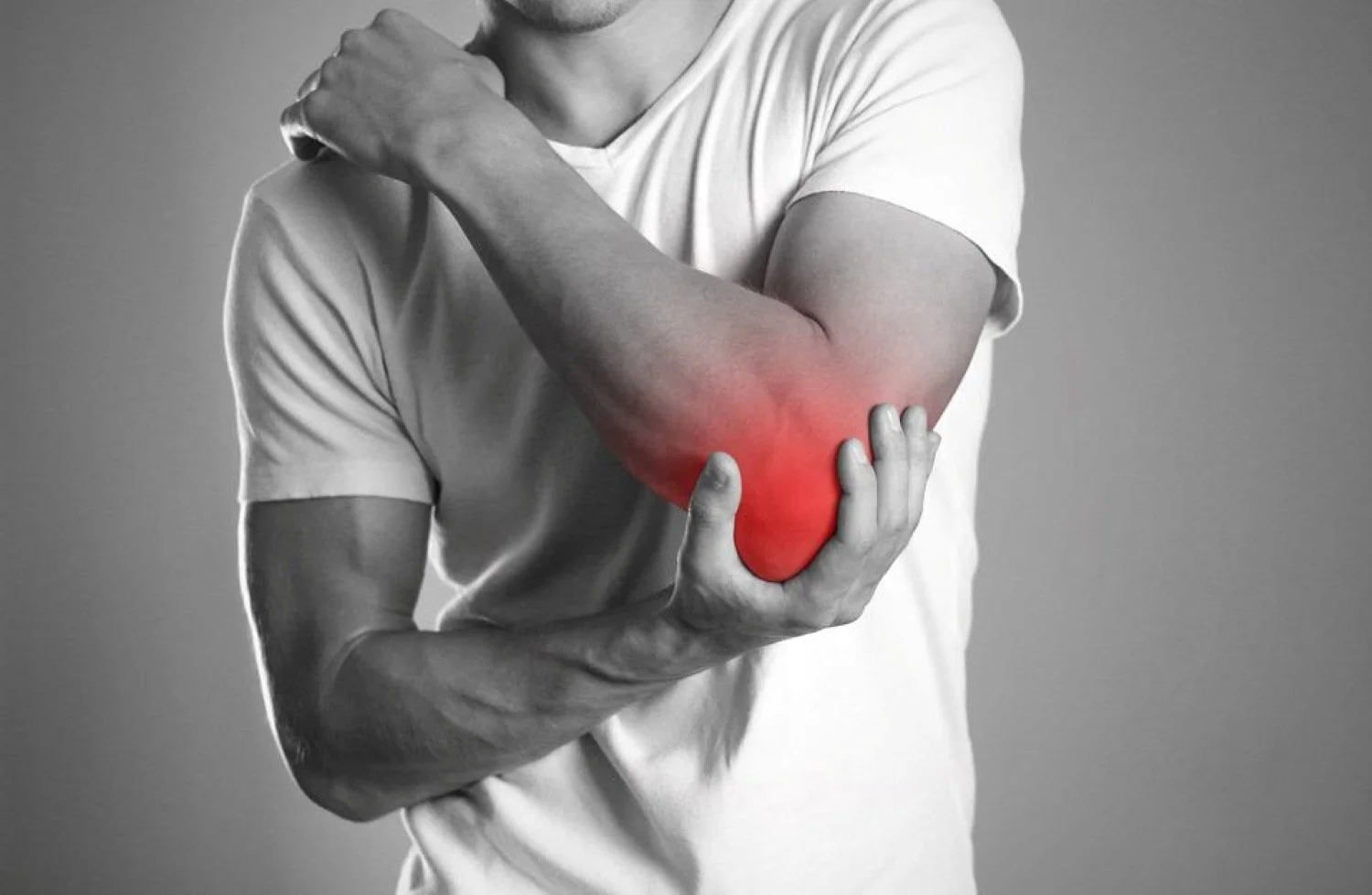
Elbow Pain Is Common, But Not Something You Should Ignore
Many people try to push through elbow discomfort.
At first, it may only show up during workouts or certain tasks.
Over time, it can start affecting:
Grip strength
Lifting ability
Work tasks
Sleep
Daily activities
The longer it lingers, the more stubborn it can become.
The good news is that most elbow discomfort can improve with the right approach.
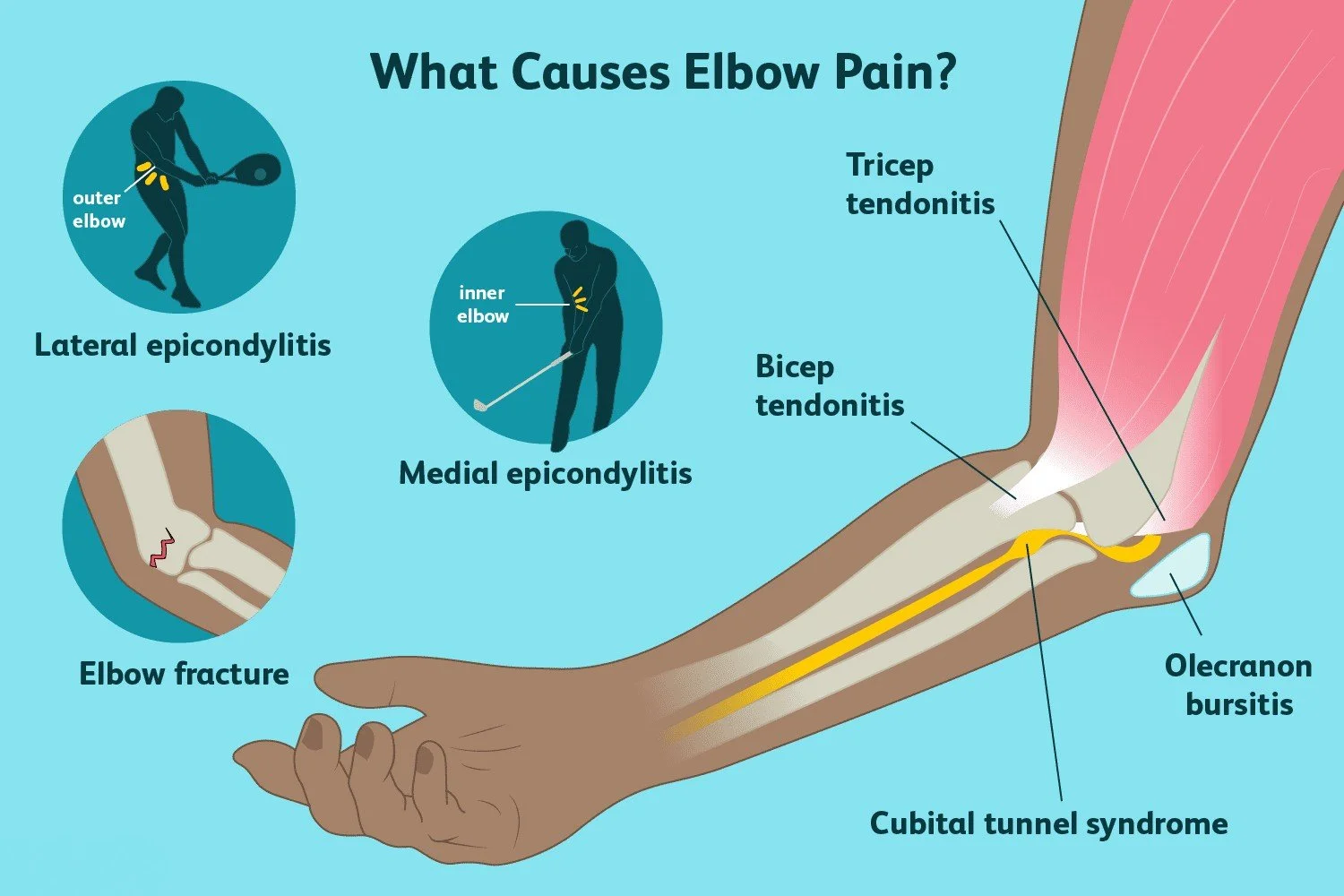
Where Is Your Elbow Irritated?
Elbow irritation is often categorized based on location:
Outer Elbow Irritation
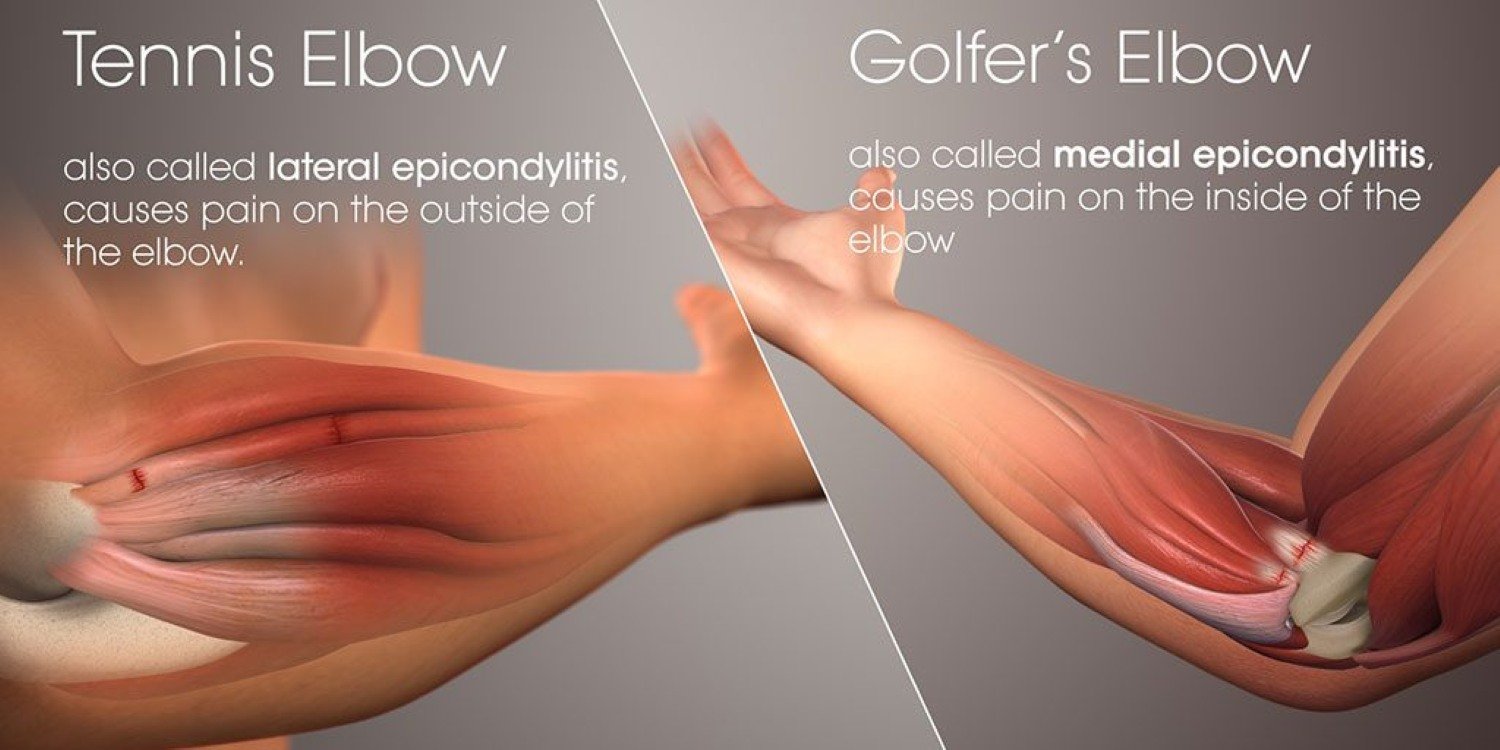
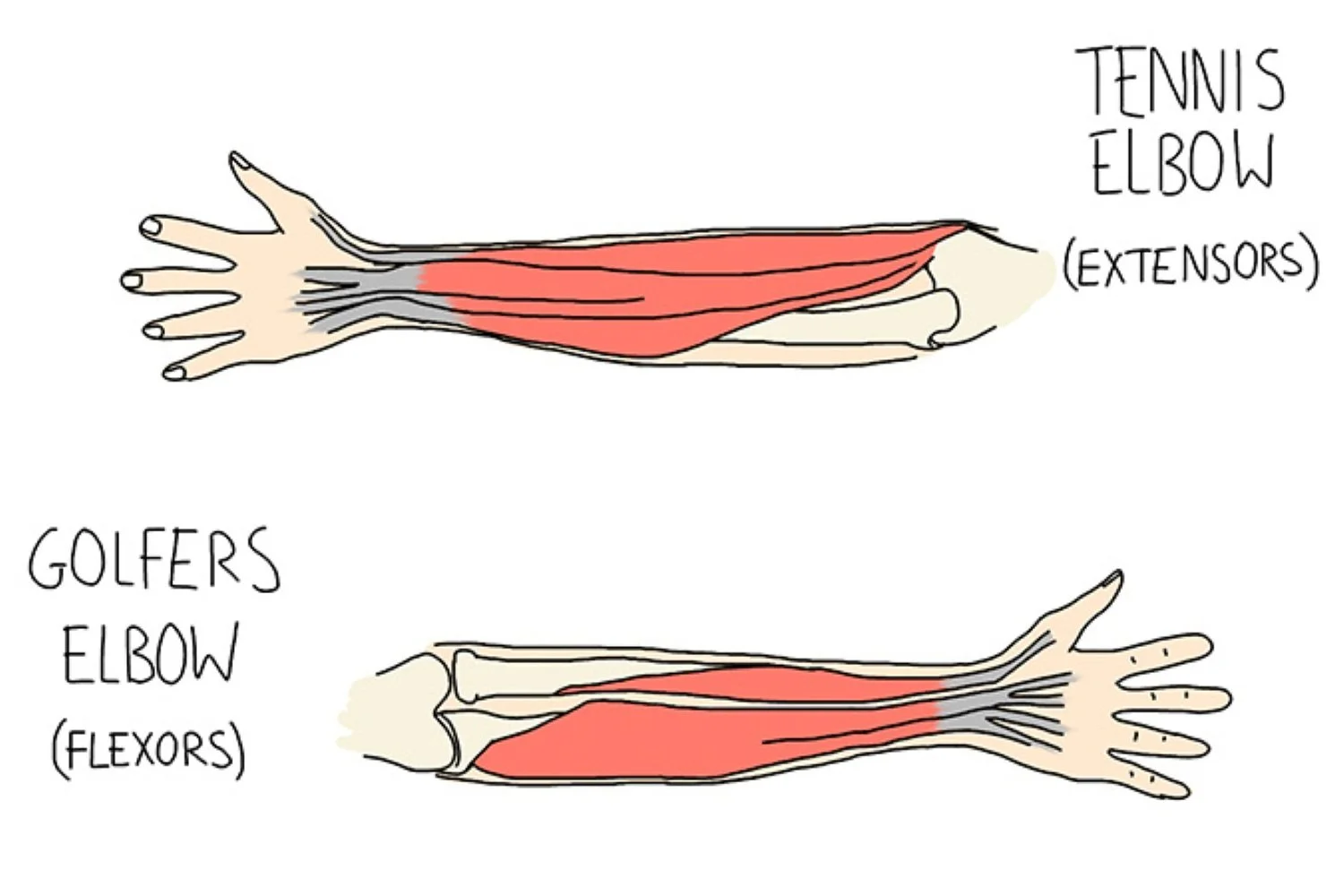
Often related to tennis elbow (lateral epicondylitis)
Common with gripping, lifting, typing, or pulling
➡️ Learn more: Tennis Elbow Treatment
Inner Elbow Irritation
Often related to golfer’s elbow (medial epicondylitis)
Common with pulling, curling, climbing, or throwing
➡️ Learn more: Golfer’s Elbow Treatment
Front or Back Elbow Irritation
May involve:
Tendon irritation
Joint stress
Triceps or biceps loading issues
Movement limitations
These cases often require a more individualized assessment.
Common Causes of Elbow Discomfort
Elbow discomfort is often related to:
Repetitive gripping or lifting
Overuse from gym training
Poor load management
Returning too quickly after time off
Weakness in the forearm or upper body
Shoulder or wrist movement limitations
Work-related strain
Sports like tennis, golf, climbing, or throwing
Tool use or manual labor
Desk work and repetitive mouse use
Most elbow discomfort is not random. There is usually a reason it developed.
Common Types of Elbow Injuries We Treat
Tennis Elbow (Lateral Epicondylitis)
Pain on the outside of the elbow, often worse with:
Gripping, lifting, pulling
Shaking hands
Deadlifts, pull-ups, rows
Using tools, mouse/keyboard
Golfer’s Elbow (Medial Epicondylitis)
Pain on the inside of the elbow, often worse with:
Gripping + wrist flexion
Throwing, climbing, and martial art grips
Pressing movements
Repetitive work tasks
Triceps or Biceps Tendon Pain
Often irritated by:
Pressing, dips, push-ups
Pulling and heavy curls
Sudden increases in training volume
Nerve Irritation (Cubital Tunnel/Ulnar Nerve)
Symptoms can include:
Tingling radiating down into the ring/pinky finger
Burning pain, “zaps,” or sensitivity
Worse with prolonged elbow bending or leaning
Elbow Stiffness or Pain After Injury/Surgery
Common after:
Dislocations, fractures, sprains
Tendon procedures
Immobilization or prolonged rest
Why Elbow Irritation Keeps Coming Back
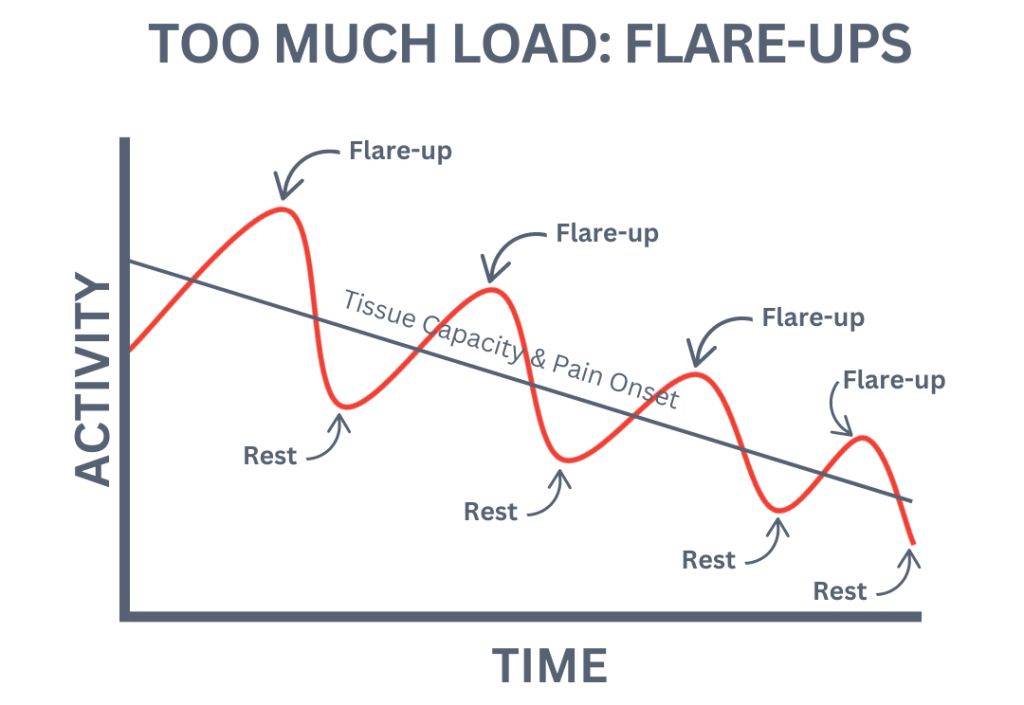
Elbow irritation often persists because the tendon or joint can’t tolerate the load you’re asking it to handle, especially if you’re doing CrossFit, martial arts, climbing, lifting, or repetitive work.
The most common drivers we see:
Too much too soon (spikes in volume, intensity, or grip demands)
Weakness or capacity deficits in the forearm/elbow/shoulder
Poor load distribution (wrist/shoulder mechanics forcing the elbow to “take the hit”)
Grip strategy issues (death-gripping bars, tools, or gi)
Nerve sensitivity or mobility restrictions
Under-dosed rehab (rest + random exercises instead of progressive loading)
In many cases, elbow irritation improves as the tendon becomes stronger and more tolerant of stress.
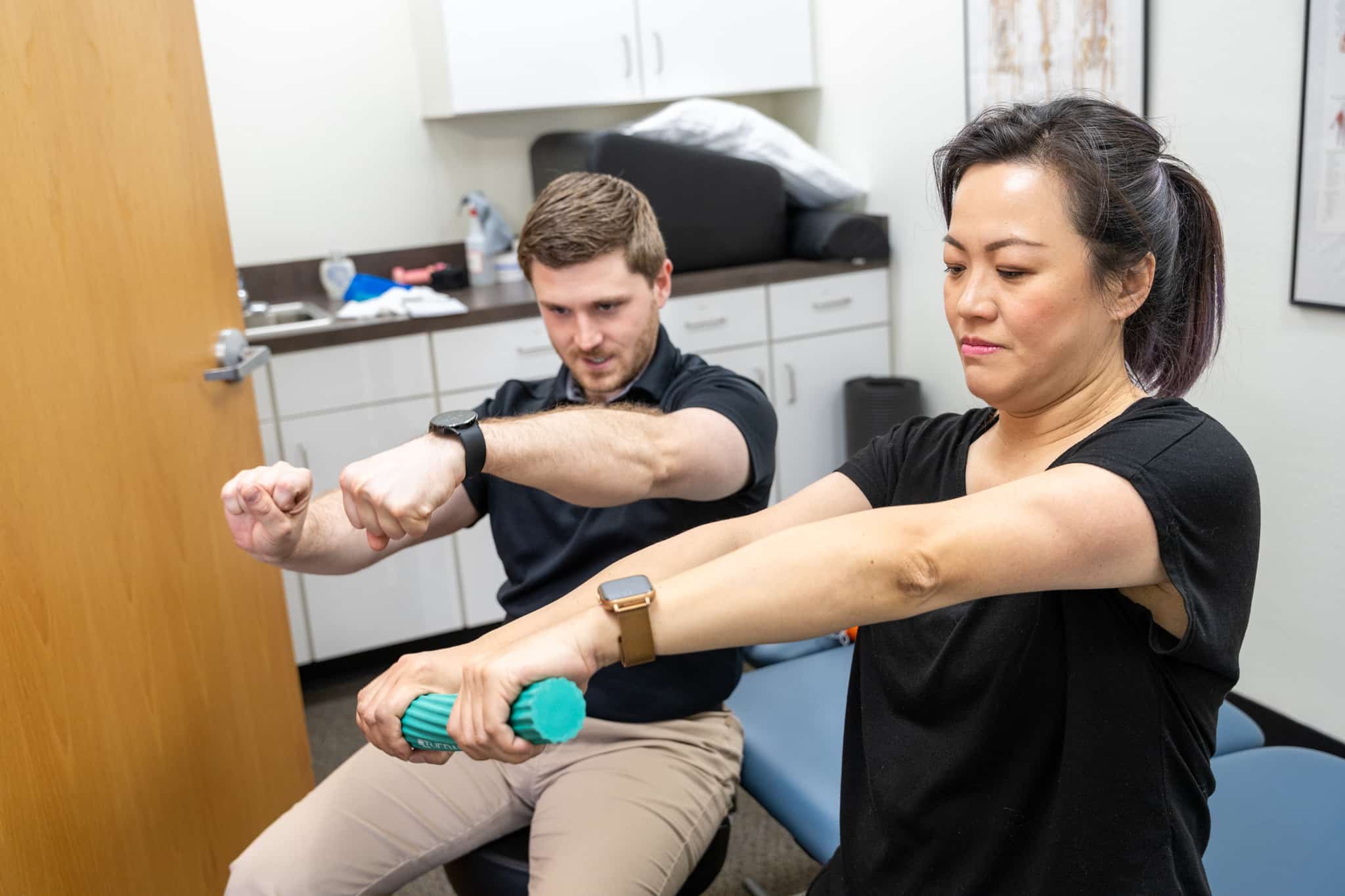
How Physical Therapy Helps Elbow Injuries
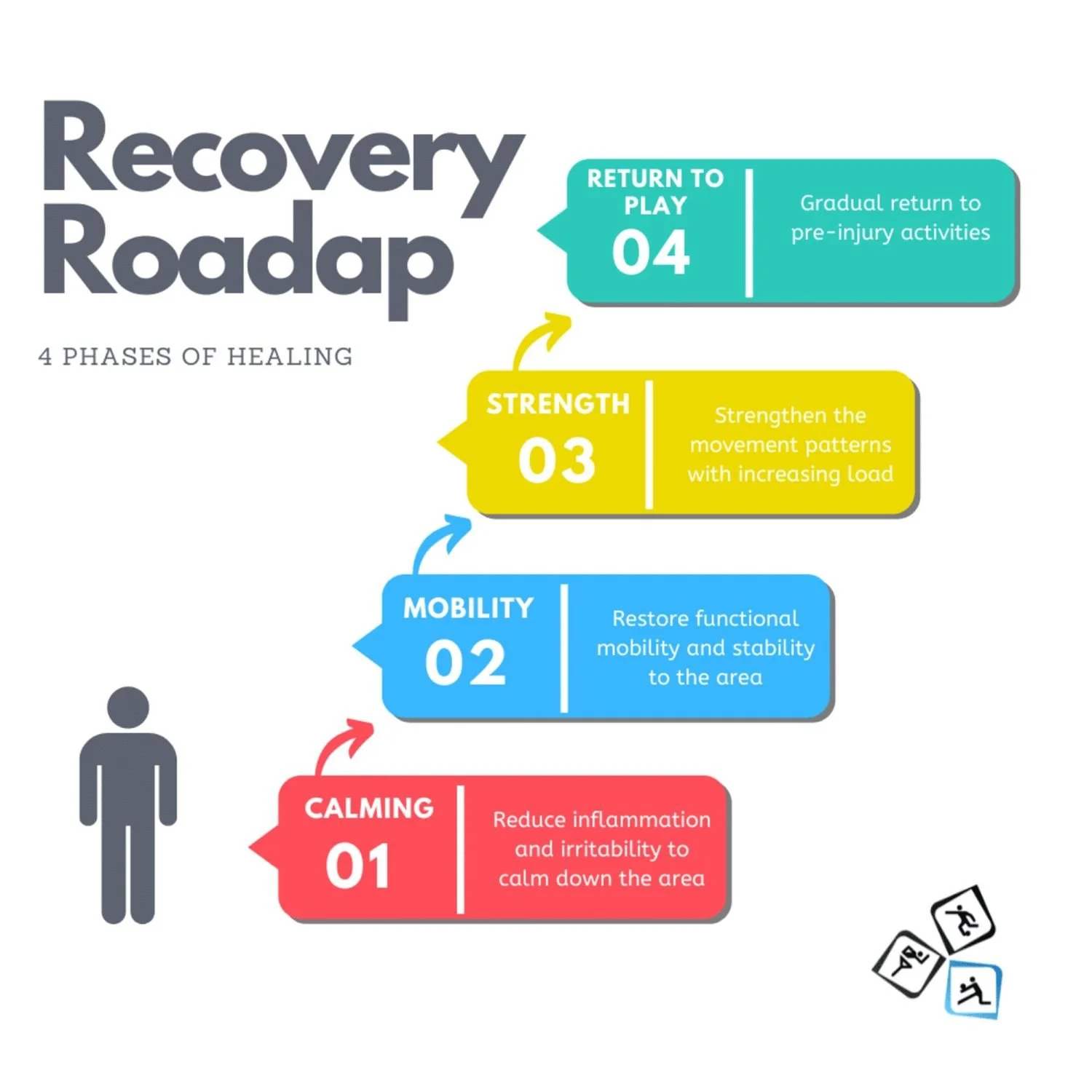
At Tualatin Valley Physical Therapy, treatment is focused on more than just symptom relief.
Your plan may include:
Progressive strengthening
Tendon-loading programs
Grip training
Movement and lifting modification
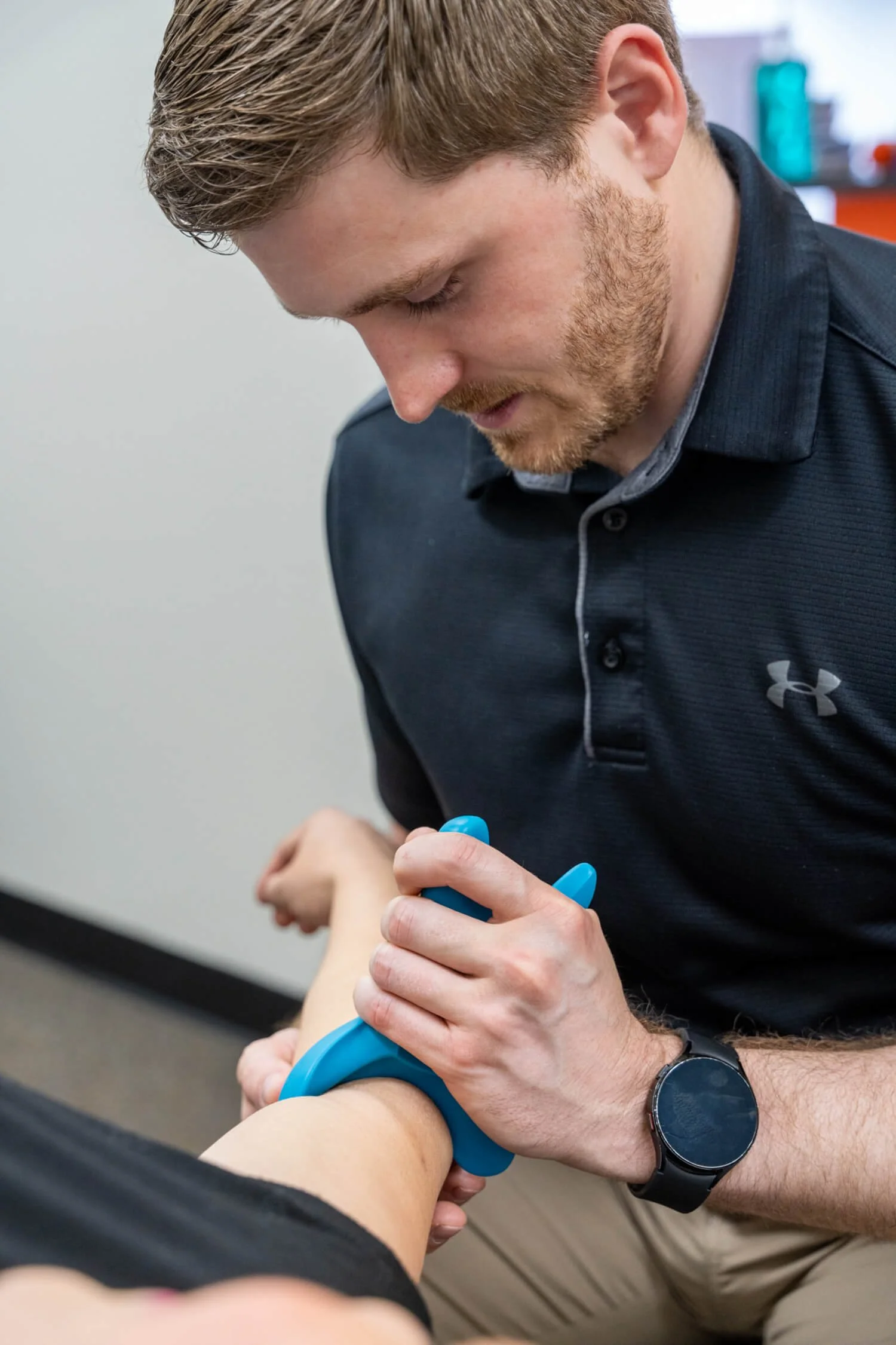
Manual therapy when appropriate
Mobility work for the wrist, elbow, and shoulder
Return-to-sport or work planning
Education so you understand what is happening
The goal is to help your elbow become more durable, not just temporarily feel better.
Our Approach to Treating a Painful Elbow
1) Find the Real Pain Generator (not just the label)
“Tennis elbow” is a useful nickname, but your plan should be based on:
Specific tendon involvement
Load tolerance and irritability
Movement patterns and training/work demands
Nerve involvement (if present)
2) Reduce Symptoms Without “Shutting You Down.”
We prioritize:
Smart activity modifications
Targeted manual therapy when appropriate
Mobility work that supports training/work, not endless stretching
3) Build Tendon + Tissue Capacity With Progressive Loading
Elbow tendons respond best to:
Graded strengthening
Progressive loading exposure
Specific grip + wrist endurance work
Plus shoulder/scapular and trunk contribution (when relevant)
4) Return to Sport/Work With a Plan You Can Trust
You’ll leave with clear progressions for:
Lifting, pull-ups, pressing, gripping
Throwing or striking
Tools/keyboard workloads
Flare-up rules (“what to do if it spikes”)
Advanced Options for Your Recovery
Some elbow conditions respond well to exercise-based therapy alone.
For more persistent cases, additional tools may be used as part of a complete plan. Options such as laser therapy or shockwave therapy may be integrated into your personalized treatment plan.
Shockwave Therapy (ESWT) for stubborn tendon pain
High-Intensity Laser Therapy (HILT) to support pain relief and tissue recovery
Progressive strengthening and return-to-performance planning
These are most effective when combined with proper rehab, not used as standalone quick fixes.
Check out our Accelerated Recovery & Performance Programs to learn more!
Elbow Discomfort in Active Adults
Elbow discomfort can interfere with:
Pull-ups
Deadlifts
Rows
Curls
Carrying groceries
Tool use
Yard work
Parenting tasks
Computer work
Sports and recreation
If you value staying active, elbow discomfort can be especially frustrating.
We help you stay active while recovering, not just sit on the sidelines.
Physical Therapy Treatment for Elbow Injuries in Hillsboro, OR
If you are searching for:
Elbow discomfort treatment Hillsboro
Physical therapy for elbow injuries
Tennis elbow rehab near me
Golfer’s elbow treatment Hillsboro
Help with elbow irritation from lifting
Tualatin Valley Physical Therapy provides one-on-one care designed to help you recover and return to activity with confidence.
Signs You Should Get Evaluated by a PT
Consider getting checked if you have:
New pain that isn’t getting better within 1-2 weeks
Symptoms are worsening
Pain with grip strength, lifting, or daily tasks
Morning stiffness or “warming up” pain that returns later
Tingling/numbness anywhere from your elbow to your hand
Pain that limits training consistency or job duties
Persistent or recurring pain
What to Expect at Your First Visit
Your evaluation is 1-on-1 with a Doctor of Physical Therapy and includes:
Detailed history of your pain and activity (training + work demands included)
Strength and movement analysis
Elbow, wrist, and shoulder assessment
Grip and tendon loading tolerance testing
Nerve screening when indicated
Identification of aggravating factors
A clear diagnosis + personalized treatment plan
Exercises you can actually do at home (and progress)
You leave with clarity and direction.
Why Patients Choose Tualatin Valley Physical Therapy
At many clinics, treatment for elbow pain is rushed or generalized.
Here, your care is different:
Cash-based and transparent pricing (no insurance delays)
Same-day appointments when available
1-on-1 care with a DPT (no handoffs to techs)
Full 60-minute sessions focused on YOU
Treatment tailored to your lifestyle and goals
Focus on efficient recovery and long-term prevention
Plans designed for active adults (CrossFit, throwing sports, martial arts, lifting)
Stop Letting an Irritated Elbow Limit Your Life
You do not need to keep guessing or avoiding the activities you enjoy.
Get a clear plan and one-on-one care designed to help your elbow improve.
Book your evaluation today.
Frequently Asked Questions About Elbow Discomfort
-
Elbow pain is often caused by overuse, repetitive gripping, tendon irritation, weakness, or poor load management. Common conditions include tennis elbow and golfer’s elbow.
-
Short-term rest may help calm symptoms, but long-term recovery often requires strengthening and progressive loading.
-
Yes. Physical therapy can improve strength, tendon capacity, movement patterns, and reduce pain.
-
No. Elbow irritation can involve tendon overload, joint irritation, nerve sensitivity, referred pain from the neck or shoulder, or a combination of these.
-
Many cases improve within 6–12 weeks with the right progressive loading plan, but timelines vary based on irritability, exposure to load, and how long symptoms have been present.
-
Not necessarily. Most people do best with smart modifications (grip changes, load reductions, and exercise swaps) while rebuilding tendon and tissue capacity with a progressive plan.
-
“Tennis elbow” typically refers to pain on the outside of the elbow, while “golfer’s elbow” refers to pain on the inside. Both commonly relate to tendon overload from gripping and from repeated demands on the wrist or forearm.
-
Often, yes, depending on severity. PT can help by improving nerve mobility and tolerance, contributing to movement mechanics, and reducing provocative positions and loads.
-
If pain is persistent, worsening, limiting activity, or not improving with rest.
-
Seek medical evaluation sooner if you have major swelling, deformity, significant loss of motion, rapidly worsening numbness/weakness, fever, or symptoms after a serious fall/impact. This may be a sign of a more serious condition and is likely not appropriate for physical therapy until cleared.
Related Services
You may also be interested in:
Stop Waiting. Start Recovering.
No referrals. No insurance delays. No techs or aides.
Just one-on-one care with a Doctor of Physical Therapy.
Whether you’re dealing with back pain, a sports injury, an auto accident, or a work injury, we make it simple to get started. Same-day appointments available.
Serving Hillsboro, Cornelius, Forest Grove, Aloha, and the greater Tualatin Valley.
Call us today at (971) 238-5755, or click the button below to schedule your initial evaluation online.
Unsure if self-pay physical therapy is for you? Schedule a free 15-minute consultation using the same button!
Our friendly team is ready to guide you on your path to recovery and lasting wellness.
Auto (PIP) Accepted
〰️
Workers' Compensation Accepted
〰️
Out-of-Network Reimbursement Available
〰️
Auto (PIP) Accepted 〰️ Workers' Compensation Accepted 〰️ Out-of-Network Reimbursement Available 〰️
Transparent pricing. Clear plan. No surprise bills.
Experience the TVPT Difference.