How to Fix Elbow Pain From Lifting (Without Losing Progress)
A smarter, evidence-based approach to fix elbow pain from lifting without stopping
Elbow Pain Is Common… But It’s Not “Normal”
If you lift regularly, there’s a good chance you’ve felt it:
A sharp pain during curls
A nagging ache during pull-ups
Discomfort gripping a barbell or dumbbell
You’re not alone. Elbow pain is one of the most common issues we see in active adults and lifters at Tualatin Valley Physical Therapy in Hillsboro, OR.
But here’s the key:
Pain doesn’t mean you have to stop lifting.
It means something needs to change.
This guide will show you how to fix elbow pain without losing your strength, momentum, or confidence.
Why Elbow Pain Happens in Lifters
Most elbow pain isn’t from a single injury.
It builds over time.
Common Causes We See Clinically
1. Too Much, Too Fast
Rapid increases in weight, volume, or frequency overload your tendons.
2. Grip Overload
Heavy pulling, deadlifts, and rows place constant stress on the forearm tendons.
3. Poor Recovery
Lack of sleep, rest days, or recovery work slows tissue adaptation.
4. Weak Forearms & Supporting Muscles
If the muscles aren’t strong enough, the tendons take the hit.
5. Repetitive Movement Patterns
Doing the same lifts, the same way, every week = overuse.
6. Poor Progression Strategy
Skipping foundational strength or jumping ahead too quickly increases the risk of injury.
The Biggest Mistake: Stopping Completely
Most people respond to elbow pain by doing one of two things:
❌ Push through it → worse pain
❌ Stop everything → lose progress
Neither works long-term.
The goal is not rest alone
The goal is load management
Step 1: Modify Load (Don’t Eliminate It)
You don’t need to stop training.
You need to train smarter.
What to Do Instead
✔ Identify which exercises trigger pain
✔ Reduce weight, sets, or reps temporarily
✔ Adjust grip (neutral, wider, EZ bar, etc.)
✔ Modify technique or range of motion
Example Fixes
Switch straight bar curls → EZ bar or dumbbells
Reduce heavy pulling volume temporarily
Use straps to offload grip when needed
Key principle: Keep training, just remove the irritant
Step 2: Rebuild Strength (This Is the Missing Piece)
Elbow pain is rarely just “inflammation.”
It’s usually a capacity problem.
You need to build stronger tissue, not just rest it
Priority Areas to Strengthen
Forearms (CRITICAL)
Wrist curls
Reverse wrist curls
Isometric holds (dumbbell holds, carries)
Grip Strength
Farmer’s carries
Towel holds
Ball squeezes
Shoulder & Upper Back
Face pulls
YTWs
External rotations
Strong shoulders = less stress on the elbow
Mobility Work
Gentle forearm stretching
Wrist mobility drills
Programming Tip
2–3 exercises
2–3x per week
Light → controlled → progressive
Quality beats intensity early on
Step 3: Progress Without Re-Irritating It
This is where most lifters mess up.
They feel better… then go right back to full intensity.
And the pain returns.
Use These Rules Instead
✔ Increase load slowly (5–10% max)
✔ Rotate exercises and grips
✔ Avoid repeating the same stress daily
✔ Track symptoms honestly
Pain Guidelines
✔ Mild discomfort during exercise = OK
✔ Pain that lingers or worsens = adjust
Pain is feedback, not failure
Step 4: Fix the Root Cause (Not Just the Symptoms)
If your elbow pain keeps coming back…
Something deeper is being missed
This is where professional guidance matters.
How Physical Therapy Helps Fix Elbow Pain from Lifting (The Right Way)
At Tualatin Valley Physical Therapy, we don’t just treat pain, we solve it.
We focus on:
✔ Root cause analysis (not guesswork)
✔ Movement and lifting mechanics
✔ Load progression strategy
✔ Strength imbalances and weak links
✔ Return-to-lifting plans
What Makes This Different
Just clear answers and a real plan.
Quick Wins for Healthier Elbows
Start doing this now:
✔ Warm up wrists + forearms before lifting
✔ Rotate grips and equipment
✔ Add forearm + upper back work weekly
✔ Respect recovery (sleep, hydration, nutrition)
✔ Don’t ignore early warning signs
When to Get Help
You should see a PT if:
Pain lasts longer than 1–2 weeks
Pain is getting worse, not better
It limits your workouts or daily life
You’ve tried rest, and it didn’t work
The Bottom Line
Elbow pain doesn’t mean you’re broken.
It means your body is telling you something:
“I need a better strategy.”
With the right approach, you can:
✔ Keep training
✔ Fix the root cause
✔ Come back stronger
Ready to Fix Elbow Pain from Lifting for Good?
If you’re tired of guessing and want a clear plan:
👉 Schedule a free 15-minute consultation
👉 Give us a call at (971) 238-5755
👉 Or book a same-day visit
At Tualatin Valley Physical Therapy, we help active adults and lifters fix elbow pain and get back to training without setbacks.
Elbow Pain From Lifting Frequently Asked Questions
-
In many cases, yes, but it depends on the type and severity of your pain.
Mild discomfort that stays low and improves after training is often safe to work through with proper modifications. However, sharp, worsening, or persistent pain is a sign that something needs to change.
The goal is not to stop lifting completely, but to adjust load, technique, and volume so your elbow can recover while you stay active.
-
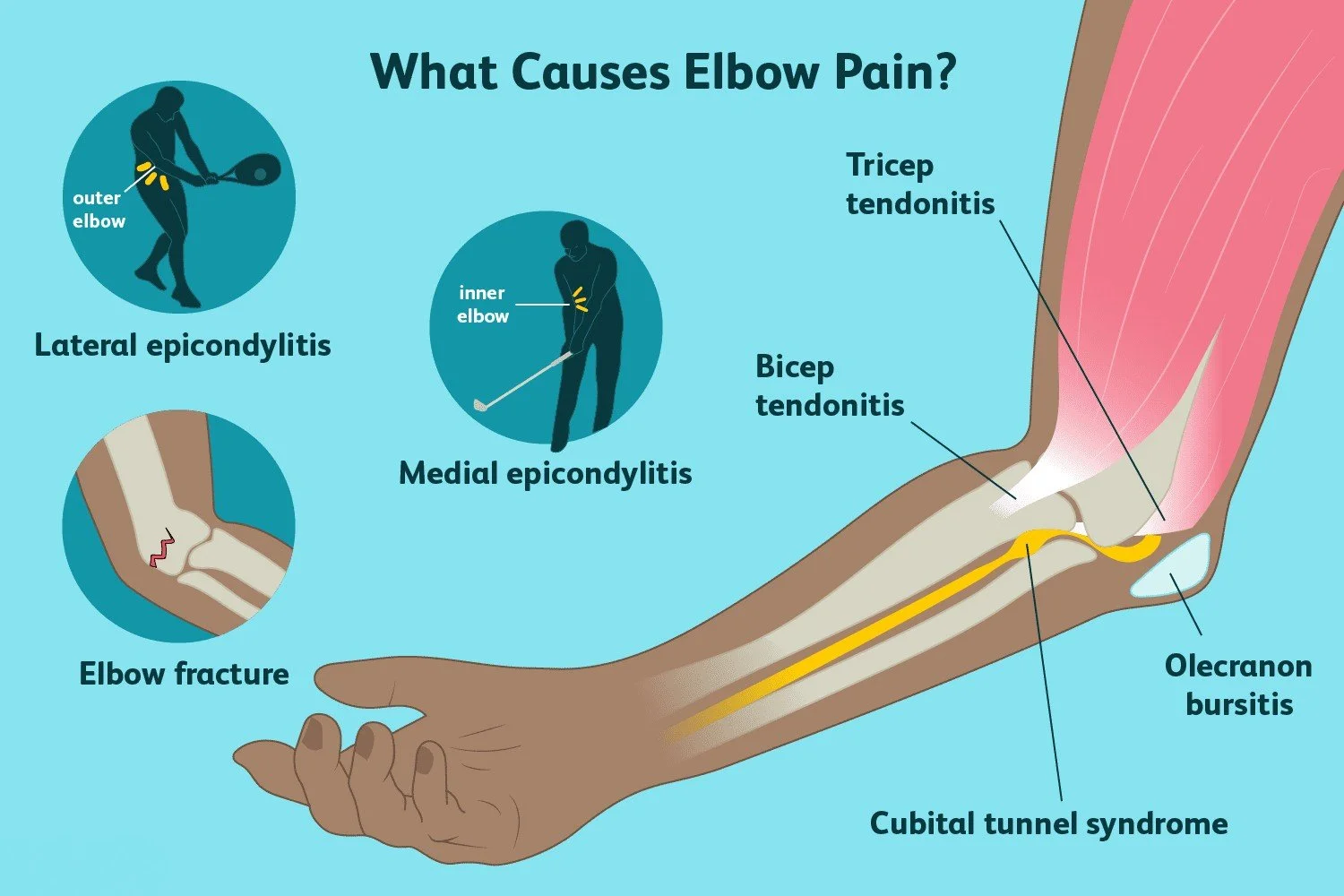
Elbow pain is usually caused by a combination of factors rather than a single issue.
Common causes include:
Rapid increases in weight or volume
Excessive gripping (deadlifts, rows, pull-ups)
Weak forearm or shoulder muscles
Repetitive movement patterns
Poor recovery or programming
Over time, these factors can overload the tendons around the elbow, leading to irritation or conditions like tendonitis.
-
Recovery timelines vary depending on severity, but most cases improve within 4–8 weeks with proper management.
Persistent or more stubborn tendon-related pain may take longer especially if the root cause isn’t addressed.
The biggest factor in recovery isn’t time, it’s having the right loading and rehab strategy.
-
Complete rest is rarely the best solution for elbow pain.
While short-term rest may help reduce irritation, tendons need gradual, progressive loading to heal properly.
Too little load = weakness
Too much load = flare-upsThe key is finding the right balance.
-
The most effective approach includes strengthening both the elbow and surrounding areas.
Helpful exercises may include:
Wrist curls and reverse wrist curls
Isometric holds (farmer’s carries, dumbbell holds)
Grip strengthening drills
Rotator cuff and upper back exercises
Scapular stabilization work
These help reduce stress on the elbow and improve overall resilience.
-
Recurring elbow pain usually means the underlying issue hasn’t been fully addressed.
Common reasons include:
Returning to lifting too quickly
Not rebuilding strength properly
Repeating the same movement patterns
Ignoring early warning signs
Lasting relief comes from fixing movement, strength, and load management, not just symptoms.
-
You should consider seeing a physical therapist if:
Pain lasts longer than 1–2 weeks
Pain is worsening or limiting your workouts
You’ve tried rest but symptoms return
You’re unsure what’s causing your pain
A physical therapist can identify the root cause and create a clear plan to help you recover and return to lifting safely.
-
Yes, technique plays a major role.
Small issues like grip position, bar path, or shoulder control can increase stress on the elbow over time.
Even experienced lifters can develop subtle movement patterns that lead to pain.
-
No.
In most cases, you can continue training by modifying exercises and avoiding aggravating movements.
You can often:
Train lower body normally
Perform pain-free upper body variations
Adjust grip, load, or equipment
This helps maintain strength and prevents setbacks.
-
There’s no true “quick fix,” but the most effective approach includes:
✔ Identifying the root cause
✔ Modifying aggravating movements
✔ Rebuilding strength progressively
✔ Improving technique and programmingThe fastest path is the right plan, not just more rest or pushing through pain.