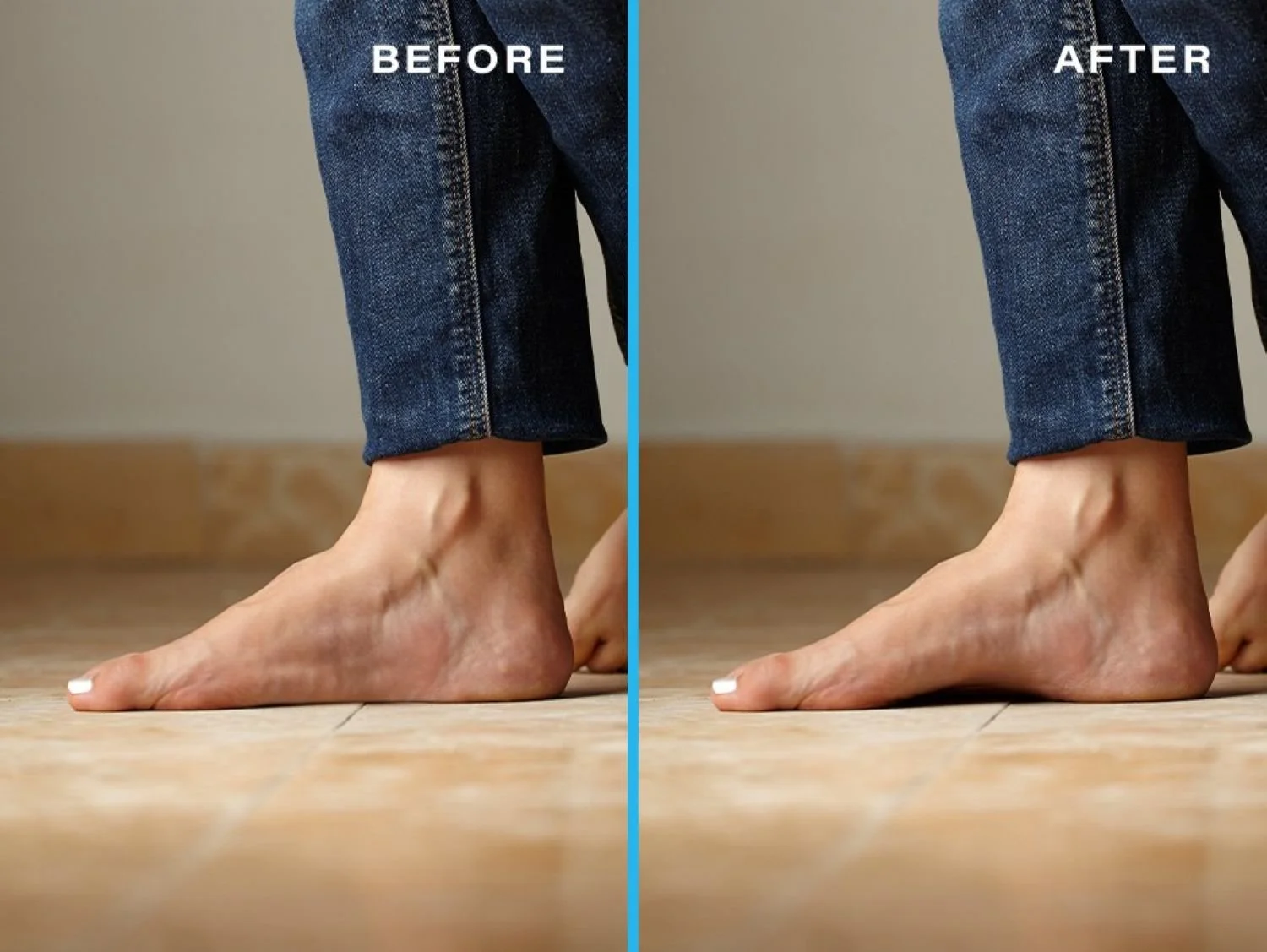
PT: The Long-Term Solution for Flat Feet (Pes Planus)
Persistent foot pain, instability, or fatigue can significantly affect how you move, exercise, and go about daily life. For many people, these issues stem from a common yet often misunderstood condition called flexible flat feet, also known as pes planus.
While the term may sound like a simple structural issue, flexible flat feet are usually a complex biomechanical problem involving muscle weakness, tendon dysfunction, and inefficiencies in lower-body movement. So, what is the solution for flat feet?
Many treatments focus only on temporary symptom relief. However, correcting the underlying problem requires a proactive and rehabilitative approach.
Physical therapy addresses the root cause, making it the long-term solution for flat feet.
Rather than simply supporting the arch, a well-designed physical therapy program helps restore proper foot mechanics, strengthen the muscles that stabilize the arch, and improve the function of the entire lower limb.
This article explores why physical therapy is the most effective long-term strategy for managing flexible flat feet and how targeted rehabilitation can help restore comfortable, efficient movement.
Understanding Flexible Flat Feet: More Than Just a “Flat Arch”
The phrase flat feet often brings to mind a foot with little or no visible arch. In reality, the condition is far more nuanced.
Flexible flatfoot is one of the most common foot postures seen in both children and adults. Studies estimate that flexible flat feet affect roughly 14–24% of children, with even higher rates in early childhood.
While many children outgrow the condition, persistent flexible flat feet in adolescence and adulthood can contribute to pain and movement problems if not addressed properly.
Flexible vs. Rigid Flat Feet
The key difference lies in how the arch behaves when the foot is not bearing weight.
Flexible Flat Feet
The arch appears flat when standing
Arch reappears when sitting or lifting the foot
Often caused by muscular or tendon weakness
Usually responds very well to physical therapy
Rigid Flat Feet
Arch remains flattened in all positions
Often caused by structural or bony abnormalities
May require medical imaging or surgical consultation
Most people diagnosed with flat feet actually have flexible flat feet, which means they respond well to strengthening and rehabilitation.
The Anatomy of a Healthy Arch
The medial arch of the foot is not a rigid structure. It behaves more like a dynamic spring, designed to absorb impact and store energy during walking and running.
The arch is supported by several key structures:
Foot bones that form the arch shape
The plantar fascia: a strong connective tissue band
The spring ligament: stabilizes the arch
Intrinsic foot muscles: small muscles inside the foot
Extrinsic muscles: muscles that cross the ankle, including the posterior tibial tendon
When these structures are strong and coordinated, the arch can effectively support body weight and absorb shock.
When they become weak or overloaded, the arch coll
What Causes Flexible Flat Feet?
Flexible flat feet typically develop from a combination of factors rather than a single cause.
Common contributors include:
Genetic predisposition
Some individuals naturally have more flexible foot structures.Ligament laxity or hypermobility
Loose ligaments allow the arch to collapse more easily under load.Posterior tibial tendon dysfunction
This tendon is one of the most important active supports of the arch.Muscle weakness
Particularly in the foot, ankle, hips, and calves.Improper footwear
Prolonged standing or repetitive loading
Weight changes or aging
Over time, these factors can gradually alter how forces move through the foot and lower limb.
Symptoms of Flexible Flat Feet
Not everyone with flat feet experiences symptoms. However, when the condition becomes problematic, common complaints include:
Pain in the arch or heel
Ankle discomfort
Fatigue when standing or walking
Hip or lower back pain
Poor balance or instability
Because the feet serve as the foundation of the body, problems in foot mechanics can influence the entire kinetic chain.
Why Orthotics Alone Are Not a Long-Term Solution for Flat Feet
Orthotics and supportive shoes are commonly recommended for flat feet.
They can be helpful in certain situations because they:
Redistribute pressure
Provide temporary arch support
Improve comfort during activity
However, orthotics do not strengthen the foot or correct movement patterns.
They support the arch externally rather than improving the body's ability to support itself.
For long-term improvement, the foot must regain active support from muscles and tendons.
This is where physical therapy becomes essential as the long-term solution for flat feet.
Why Physical Therapy Works for Flexible Flat Feet
Physical therapy focuses on active correction rather than passive support.
Instead of simply holding the arch in place, rehabilitation programs target the underlying biomechanical causes of the condition.
A comprehensive program helps:
Strengthen the muscles that support the arch
Improve the flexibility of tight tissues
Retrain movement patterns
Improve balance and proprioception
Correct gait mechanics
This approach restores the foot's ability to support itself naturally.
Your Physical Therapy Evaluation
The first step in treatment is a comprehensive assessment.
A Doctor of Physical Therapy will evaluate:
Medical history and symptoms
Understanding pain patterns, activity level, and previous injuries.
Foot posture and alignment
Observing how the arch behaves under load.
Strength and flexibility
Assessing the intrinsic foot muscles, calf muscles, and posterior tibial tendon.
Gait analysis
Watching how you walk or run to identify biomechanical inefficiencies.
Balance and control
Testing proprioception and neuromuscular coordination.
This evaluation allows the therapist to create a personalized treatment plan.
Physical Therapy Treatment for Flexible Flat Feet
Treatment usually progresses through several stages.
Phase 1: Pain Reduction and Activity Modification
If pain is present, the initial goal is to calm irritated tissues.
This may include:
Temporary activity modification
Soft tissue work
Manual therapy
Mobility exercises
Once symptoms improve, rehabilitation progresses.
Phase 2: Mobility and Flexibility Restoration
Tight calf muscles and restricted ankle mobility often contribute to arch collapse.
Treatment may include:
Calf stretching
Ankle mobility exercises
Manual joint mobilization
Restoring range-of-motion
Improving mobility allows the foot to move more efficiently during walking and running.
Phase 3: Strengthening the Arch
Strengthening exercises are a core component of treatment.
Common exercises include:
Short-foot exercises
Toe curls and towel scrunches
Toe yoga
Heel raises with arch activation
Resisted ankle inversion
These exercises strengthen the intrinsic foot muscles and the posterior tibial tendon, both of which arecritical for arch support.
Phase 4: Balance and Neuromuscular Control
Flat feet often reduce proprioception and balance.
Exercises may include:
Single-leg balance
Unstable surface training
Dynamic stability drills
These activities retrain the nervous system to control the foot and ankle more effectively.
Phase 5: Functional Movement and Gait Training
The final stage integrates strength and control into daily activities.
Therapists may work on:
Walking mechanics
Running form
Squat and movement patterns
Sport-specific drills
This ensures that the improvements translate into real-world functionality.
The Role of Footwear and Orthotics
Supportive footwear can still play a role during rehabilitation.
Well-fitted shoes help:
Reduce excessive pronation
Improve shock absorption
Allow exercises to be performed more comfortably
Custom orthotics may be used as a temporary aid, but are most effective when combined with strengthening and rehabilitation.
Measuring Progress
Physical therapists track improvement through:
Strength testing
Range of motion measurements
Gait analysis
Balance testing
Patient-reported pain and function
Most patients begin noticing improvements in comfort and stability within several weeks, although full correction can take several months.
When Is Surgery Necessary?
Surgery for flexible flat feet is rare and usually reserved for severe cases that fail to respond to conservative care.
Even after surgery, physical therapy remains essential for restoring strength, mobility, and normal movement patterns.
Building Stronger Feet for the Long Term
Flexible flat feet are extremely common, but they do not have to limit your activity or comfort.
While passive treatments like orthotics can help manage symptoms, physical therapy addresses the root causes of the condition.
Through targeted strengthening, mobility work, and movement retraining, rehabilitation can restore the foot's natural support system and prevent future problems.
For many people, this approach allows them to move with greater confidence, reduce pain, and stay active in the long term.
Your feet are the foundation of every step you take. Investing in their strength and function pays dividends throughout the entire body.
This is why physical therapy is the long-term solution for flat feet.
When You Should Seek Help
If you have:
Pain that isn’t improving
Numbness, tingling, or weakness that suddenly appears
Recurrent flare-ups
Difficulty returning to activity
Ready to Fix Your Flat Feet for Good?
At Tualatin Valley Physical Therapy, we help active adults and athletes:
✅ Move better
✅ Get stronger
✅ Stay pain-free long-term
Schedule your free 15-minute consultation or book your evaluation today