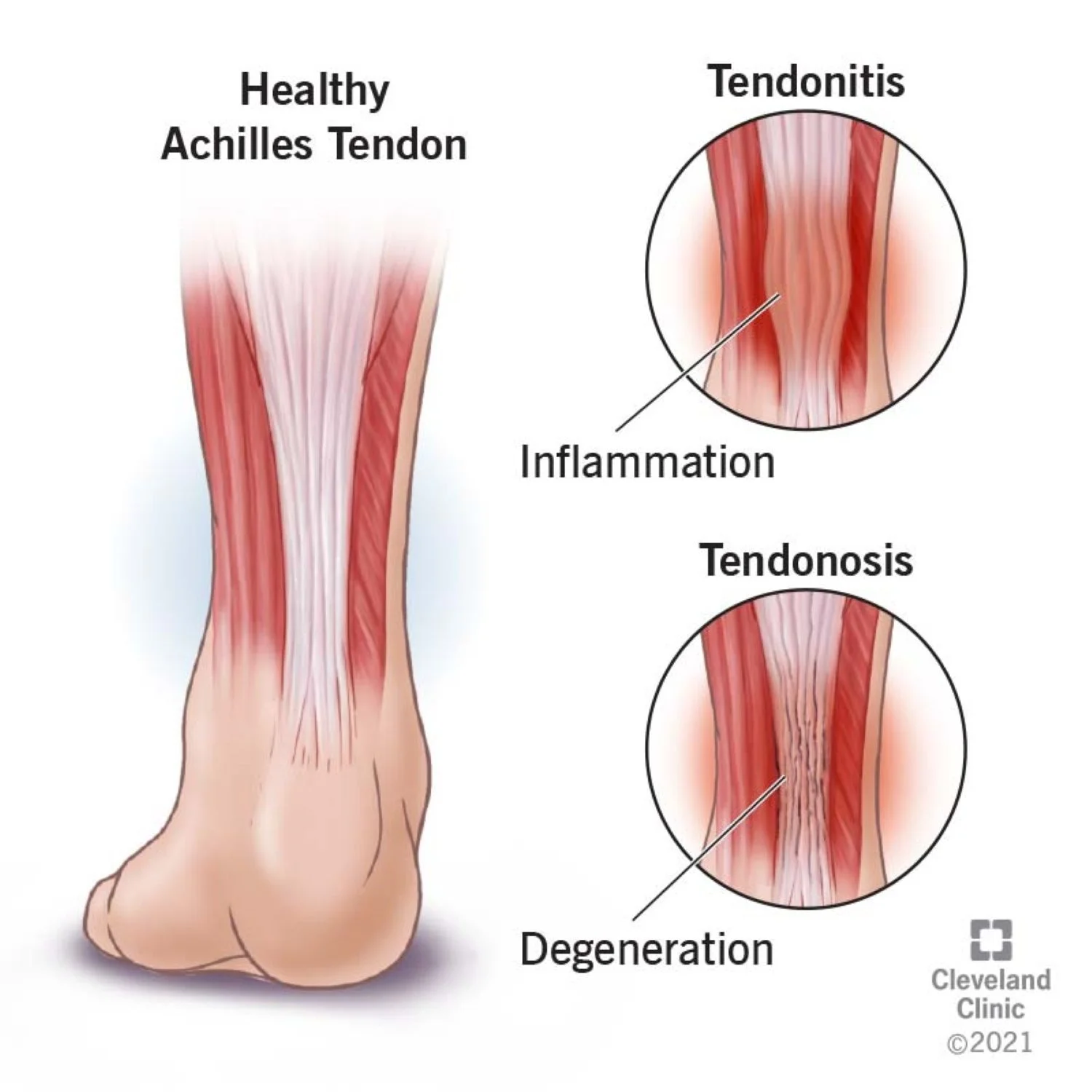
Tendonitis vs Tendinosis: Does It Actually Matter?
Understanding tendon pain and what your body really needs to heal
Confused by Tendon Terminology? You’re Not Alone
If you’ve been dealing with tendon pain, you’ve probably heard terms like:
Tendonitis
Tendinosis
Tendinopathy
It’s confusing, and honestly, it can feel like different providers are saying different things.
So… which one is right?
More importantly, does it actually change what you should do?
What Is Tendonitis?
“Tendonitis” traditionally refers to short-term inflammation of a tendon.
This usually happens when:
You suddenly increase activity
Try a new workout or sport
Push past your current capacity
Common signs:
Pain with activity
Tenderness at a specific spot
Mild swelling
This phase is typically early and reactive
What Is Tendinosis?
“Tendinosis” is used to describe longer-standing tendon changes.
Instead of inflammation, the tendon shows:
Reduced tissue quality
Disorganization of fibers
Decreased load tolerance
Common signs:
Persistent or recurring pain
Stiffness (especially in the morning)
Pain that comes back with activity
This is often what people mean when they say their pain is “chronic.”
What Is Tendinopathy? (The Term That Actually Matters)
Today, many clinicians use the term tendinopathy.
Why?
Because it simply means:
“Tendon pain and dysfunction”
Without assuming:
It’s only inflammation
Or only degeneration
This is important because tendon pain is often a mix of both and changes over time.
So… Does the Difference Matter?
Yes and No
✅ It Matters Because…
If your tendon pain has been around for weeks or months:
It’s usually not just inflammation
That means:
Anti-inflammatories alone won’t fix it
Rest alone won’t fix it
It Matters Less Because…
The more important question is:
“What does your tendon need right now?”
Not just:
“What do we call it?”
Why Tendon Pain Gets “Stuck”
This is where most people go wrong.
They treat tendon pain like a short-term injury…
When it’s actually a problem of the load and capacity.
What Often Happens:
Pain starts → rest
Pain improves → return to activity
Pain comes back
Repeat
Why?
Because the tendon never rebuilt its capacity.
What Tendons Actually Need to Heal
Tendons respond best to the right amount of load, not just time.
Too Little Load
❌ Weakens the tendon
❌ Reduces tolerance
❌ Slows recovery
Too Much Load
❌ Irritates the tendon
❌ Causes flare-ups
The Goal
✅ Progressive, controlled loading
What Actually Helps Tendon Pain Long-Term
Instead of chasing labels, focus on what works:
1. Load Management
Adjust activity, not eliminate it
2. Progressive Strengthening
Gradually rebuild tendon capacity
3. Pain-Guided Progression
Use symptoms as feedback, not fear
4. Movement & Technique Work
Reduce unnecessary stress
5. Structured Return to Activity
Avoid the “boom and bust” cycle
Why This Matters to You
Many people spend months:
❌ Resting
❌ Stretching
❌ Taking anti-inflammatories
…but never actually rebuild the tendon.
That’s why the pain keeps coming back.
Our Approach at Tualatin Valley Physical Therapy
At Tualatin Valley Physical Therapy, we focus on:
✔ What your tendon needs right now
✔ Building capacity safely
✔ Getting you back to activity
✔ Preventing future flare-ups
Not just labeling the problem, but solving it.
The Bottom Line
Tendonitis vs tendinosis?
It can matter, but not as much as you think.
What matters most is:
Having the right plan at the right time
Ready to Move Forward?
Still dealing with tendon pain that won’t go away?
Call us at (971) 238-5755
Book your evaluation today
Or schedule a free 15-minute consultation
Let’s build a plan that actually works.
Tendon Terminology Frequently Asked Questions
-
Tendonitis refers to short-term inflammation of a tendon, while tendinosis describes longer-term changes in tendon structure and reduced tissue quality. Many providers now use “tendinopathy” as a broader term for tendon pain.
-
No. While early tendon pain may involve inflammation, persistent tendon pain is often related to reduced load capacity and tissue adaptation rather than ongoing inflammation.
-
Tendon pain often returns when the tendon hasn’t been fully strengthened. Pain may improve with rest, but without rebuilding capacity, the tendon becomes irritated again when activity increases.
-
Complete rest is rarely the best solution. Most tendons respond better to controlled, progressive loading rather than total inactivity.
-
Mild cases may improve in a few weeks, while persistent tendon pain can take several weeks to months depending on severity and treatment approach.
-
The most effective treatment typically includes:
Load management
Progressive strengthening
Movement correction
Gradual return to activity