Efficiency of Strength Training vs. Stretching for Mobility
The pursuit of optimal physical health often leads us to a seemingly endless array of advice, with two pillars frequently presented in opposition: strength training and stretching. We’re told to do weightlifting to build muscle and stretching for mobility. But what if this binary choice is a false dichotomy?
What if the true answer lies not in choosing one over the other, but in understanding their distinct roles and their profound interconnectedness? In an era when health club membership continues to grow, with approximately 77 million members in 2024 and a 6% year-over-year increase, underscoring a growing consumer commitment to wellness, clarity on effective movement strategies is more crucial than ever.
This article aims to unpack what your body truly needs, moving beyond the superficial debate to reveal a more nuanced, practical approach to movement, resilience, and overall well-being.
Beyond the Either/Or Debate
The fitness landscape is often painted with broad strokes, presenting strength training and stretching as opposing forces, each with its own camp. This simplified view can lead to confusion, misguided efforts, and unmet goals. Many individuals find themselves caught in the middle, unsure whether to prioritize building muscle or improving flexibility, especially when facing common, essential partnership complaints such as "tight muscles" or restricted movement.
This article will dissect the core principles of both strength training and stretching, clarify the often-confused concepts of flexibility and mobility, and ultimately reveal that strength training is the foundational element for unlocking accurate functional movement, with stretching serving as a powerful yet specific complementary tool.
The Common Dilemma: "Tight Muscles" and Conflicting Advice
The ubiquitous advice to "stretch more" to combat perceived tightness is a common starting point for many. However, the reality is often more complex. When we experience hamstring stiffness, hip restriction, or tight shoulders, we are immediately told to stretch. This advice, while well-intentioned, frequently fails to address the underlying cause of the perceived tightness.
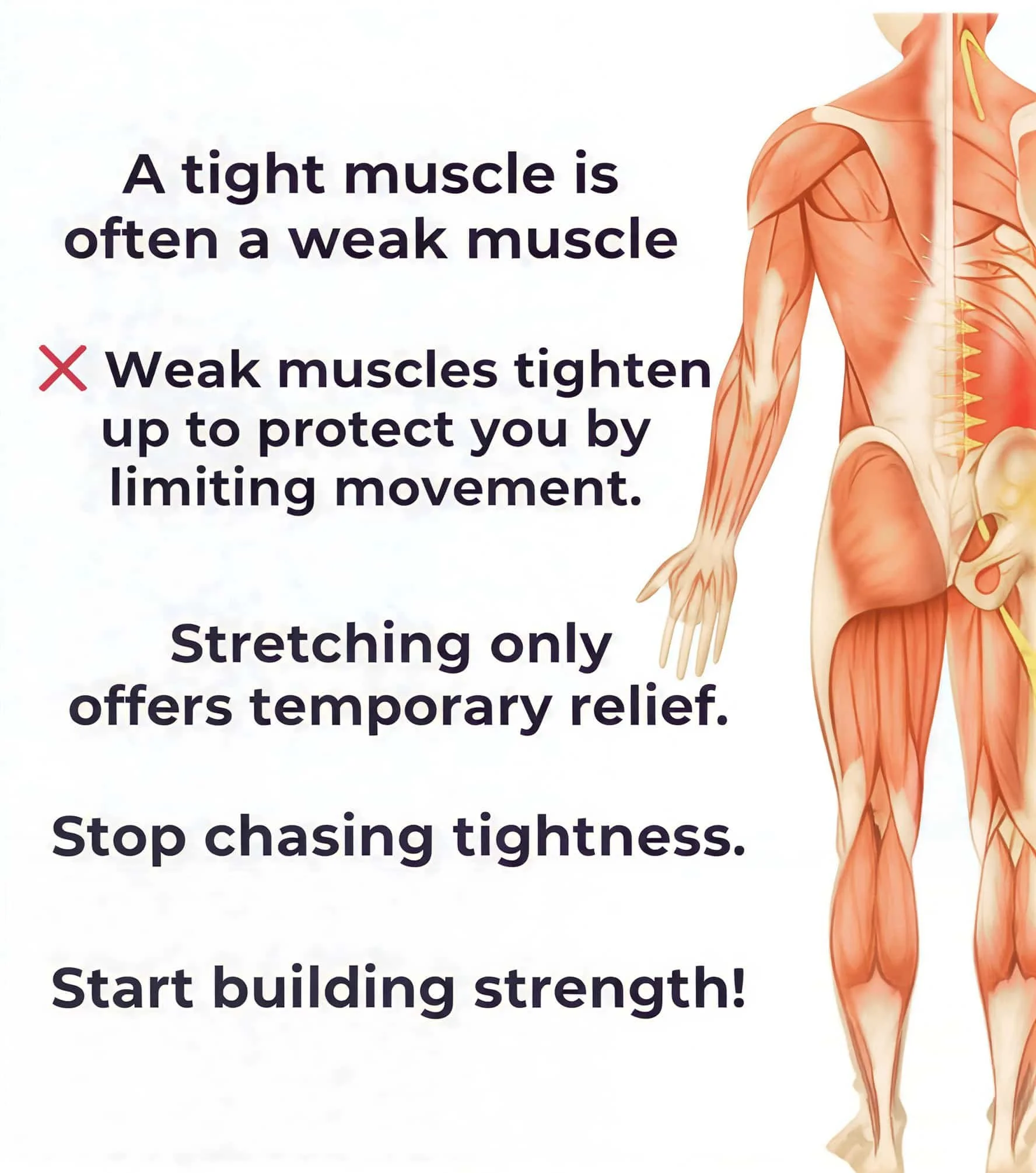
Often, what feels like a muscle that is too short is, in fact, a muscle that is neurologically inhibited from lengthening due to weakness, instability, or a protective mechanism against potential injury. Conflicting advice abounds, with some advocating for static stretching before activity, while others preach it’s a necessity after workouts. Navigating this information can be daunting, prompting many to wonder whether to prioritize building raw strength or greater flexibility.
Shifting Paradigms: From Static Flexibility to Dynamic Mobility
The traditional focus on static flexibility, the passive range of motion a joint can achieve with external assistance, is gradually giving way to a more functional understanding of mobility. Mobility encompasses the ability to actively control movement through a desired range of motion, integrating strength, stability, and flexibility. It's not just about how far a joint can move, but how well it does move.
This shift in perspective fundamentally alters how we should view the roles of strength training and stretching for mobility. Instead of viewing them as separate entities, we begin to see their interconnectedness, with strength training emerging as a primary driver of proper, functional mobility.
What We'll Unpack: The Cooperative Relationship (and When to Prioritize)
This article will delve into the physiological underpinnings of both strength training and stretching.
We will unpack the distinct benefits and limitations of each, and explore how strength training, through specific mechanisms, can enhance the range of motion and improve joint health.
We will clarify the critical distinction between flexibility and mobility, and then demonstrate why a robust, strength-based foundation is essential to achieving proper mobility.
Furthermore, we will examine the nuanced role of stretching, identify specific scenarios where it truly shines, and debunk common myths that often lead to ineffective practices.
Ultimately, the goal is to equip you with the knowledge to craft a personalized movement strategy that aligns with your body’s true needs for optimal function and longevity.
Defining the Fundamentals: Strength, Flexibility, and Mobility
Before dissecting their relationship, it's crucial to establish clear definitions of the core concepts we’ll discuss. Understanding these distinctions is key to appreciating how strength training and stretching contribute to overall physical well-being.
What is Strength Training?
Strength training, also known as resistance training, involves using resistance to build skeletal muscle strength, endurance, and size. This resistance can come from weights, resistance bands, your own body weight, or specialized machines.
The fundamental principle is to create mechanical tension in the muscles, forcing them to adapt and become stronger over time. The global weight-training machines market, valued at approximately USD 8.5 billion in 2023, underscores the significant and growing interest in this form of training. Beyond aesthetics, strength training plays a vital role in improving metabolism, bone density, and cardiovascular health.
What is Stretching?
Stretching is any activity that improves flexibility by elongating muscles and the connective tissue surrounding joints. Stretching can be done through various methods, including static stretching (holding a position for a period of time), dynamic stretching (moving joints through their full range of motion), and proprioceptive neuromuscular facilitation (PNF). Historically, stretching has been widely recommended for its perceived benefits in injury prevention and reducing muscle soreness.
The Critical Distinction: Flexibility vs. Mobility
While often used interchangeably, flexibility and mobility are distinct. Flexibility refers to the passive extensibility of muscles, tendons, and ligaments; essentially, how far an external force can move a joint. Think of touching your toes with someone pushing your back.
Mobility, on the other hand, is the ability to actively move a joint through its full range of motion with control. It’s the combination of flexibility, strength, and coordination. Proper mobility means you can not only achieve a stretch but also actively contract the muscles around that joint to control the movement. For instance, performing a deep squat with good form requires mobility in the hips, knees, and ankles, not just passive flexibility.
The Dominant Role of Strength Training in Enhancing Mobility and Preventing Injury
The prevailing narrative often underplays the profound impact strength training has on mobility and injury prevention. While stretching has its place, strength training is the fundamental driver of functional movement and resilience.
Strength as the True Solution for "Tightness" and Adaptive Shortening
Much of what we perceive as "tightness" is not due to chronically shortened muscles but rather to a neurological response. When muscles are weak or the nervous system feels unstable through a particular range of motion, it can create protective tension or "tightness." This is particularly true for the hamstrings, where weakness in the glutes or core can overload them, prompting the nervous system to signal them to contract to protect the lower back. Similarly, weak hip abductors can cause the glutes to feel tight.
Strength training addresses this by building muscles' capacity to lengthen under tension and control that lengthening, effectively resolving perceived tightness by improving neuromuscular control and muscular strength. When muscles are strong throughout their entire functional range, the nervous system becomes more confident, allowing for greater movement.
Physiological Mechanisms: How Strength-Based Training Builds Functional Range of Motion
Strength training inherently enhances the range of motion by taking muscles through their whole excursion under load. During exercises like Squats, for example, your hamstrings, quadriceps, glutes, and hip flexors are taken through a significant range of motion. The eccentric phase, where the muscle lengthens under tension as you lower into the squat, is particularly crucial. This controlled lengthening stimulates muscle fibers to adapt, becoming more resilient and capable of operating through a greater full range of motion.
As muscles grow stronger, they also provide better support and stability for the joint, allowing for more fluid, controlled mobility. Furthermore, progressive overload in strength training can lead to adaptations in connective tissues, such as tendons, making them stiffer and more efficient at transmitting force, thereby indirectly supporting greater joint control.
Strength Training for Robust Injury Prevention
The evidence supporting the role of strength training in injury prevention is substantial. A systematic review published in the British Journal of Sports Medicine found that strength training reduced sports injuries by nearly one-third and overuse injuries by almost half. This is mainly because strong muscles act as shock absorbers and stabilizers for the joints. A strong core is fundamental for maintaining good posture and preventing lower back injuries, as it supports the spine.
By strengthening the supporting muscles around joints such as the shoulders and hips, strength training improves stability and reduces the likelihood of sprains and strains. In weightlifting, while injuries do occur, the incidence rate per hour of training is relatively low, with the most common sites being the knee, lower back, and shoulder. This underscores that when performed correctly, strength training is a powerful protective modality.
Examples: Strength Exercises That Inherently Improve Mobility
Many foundational strength exercises, when performed correctly through a full range of motion, directly enhance joint mobility.
Squats: This compound movement is excellent for developing mobility in the hips, knees, and ankles. By lowering into a deep squat, you actively strengthen the muscles responsible for hip flexion, knee extension, and ankle dorsiflexion.
Deadlifts: Primarily targeting the posterior chain (hamstrings, glutes, lower back), deadlifts improve hip extension and strengthen the muscles responsible for hamstring flexibility and control.
Overhead Presses & Pull-ups: These exercises are crucial for shoulder health and shoulder joint mobility. They strengthen the rotator cuff muscles, improve scapular stability, and enhance the range of motion in the shoulder girdle.
Core Exercises (Planks, Bird-Dogs, Paloff Presses): A strong core is paramount for spinal stability and maintaining good posture. These exercises build resilience in the torso, reducing the risk of back pain and improving overall movement efficiency.
The Nuanced and Targeted Role of Stretching
While strength training builds the capacity for movement, stretching plays a more specific and targeted role in optimizing your physical capabilities. It's not the primary solution for most perceived tightness, but it offers distinct benefits when applied judiciously.
When Stretching Shines: Improving Stretch Tolerance and Passive ROM
Stretching is most effective when the goal is to improve stretch tolerance, the nervous system's ability to allow a muscle to lengthen, and to increase passive ROM. For individuals in sports that require extreme ranges of motion, such as gymnastics or ballet, increasing passive flexibility through targeted stretching can be essential for performance.
Moreover, after a rigorous strength-training session, static stretching can aid recovery by promoting relaxation and potentially reducing perceived muscle soreness. While research on stretching's impact on injury prevention is mixed, some studies suggest it may be associated with a reduction in all-cause mortality of up to 10%, indicating broader health benefits.
Dynamic Stretching for Warm-ups and Performance
Dynamic stretching is an excellent preparation for physical activity. Unlike static holds, dynamic stretches involve controlled movements through a joint's range of motion, mimicking the patterns of the upcoming workout or sport. Examples include leg swings, arm circles, torso twists, and walking lunges.
This type of stretching increases blood flow to the muscles, primes the nervous system for movement, and activates the muscles that will be used, without compromising strength output. It helps prepare the body for action, enhancing performance and reducing the risk of acute injury.
Specific Scenarios Where Stretching Exercise Can Be Beneficial
Beyond warm-ups, specific stretching exercises can be beneficial in certain contexts:
Post-Workout Recovery: Gentle static stretching after exercise can help muscles relax and recover.
Addressing Specific Mobility Limitations (Post-Strength Work): If, after a comprehensive strength program, a specific joint or muscle group still exhibits limited active ROM that affects function, targeted static stretching may be used to further increase passive range, making active control easier.
Improving Posture: For individuals with prolonged sitting that leads to postural imbalances, targeted stretching of tight anterior structures (such as the chest and hip flexors) can complement strengthening of the opposing posterior muscles to improve posture.
Mental Cooldown and Relaxation: The mindful practice of stretching can serve as a valuable tool for stress reduction and mental unwinding.
The Limitations of Stretching Alone
Relying solely on stretching to address movement issues or "tightness" is often ineffective. If a muscle is tight due to weakness or neurological inhibition, stretching alone will not resolve the underlying problem. In fact, overstretching weak muscles can worsen instability or create a false sense of flexibility without improving functional control. The limitations are also evident in research: of the numerous stretching studies reviewed, a significant portion featured small sample sizes and underrepresented elite athletes, highlighting potential limitations in drawing broad conclusions about its universal effectiveness.
Debunking Common Myths About Stretching and Strength
Misconceptions surrounding strength training and stretching for mobility are widespread and can hinder progress. Addressing these myths is crucial for adopting an effective movement strategy.
Myth 1: Stretching Prevents All Injuries
While stretching can help prevent injury by improving flexibility and potentially enhancing recovery, it is not a foolproof solution. Many injuries, especially overuse injuries, stem from muscular imbalances, poor biomechanics, and insufficient strength, which stretching alone cannot fully address. A systematic review found that strength training was significantly more effective for injury prevention than stretching. The rising incidence of exercise-related injuries, with a 17% increase in 2024, particularly among younger populations, underscores the need for a multifaceted approach that prioritizes strength and proper form.
Myth 2: You Need to Stretch Before Every Workout
The notion that static stretching for mobility is a mandatory pre-workout activity is outdated. Performing static stretches on cold muscles before exercise can temporarily decrease muscle power output and may even increase the risk of injury by reducing neuromuscular response. Instead, a dynamic warm-up that involves moving through a full range of motion is far more effective at preparing the body for activity. Static stretching is best reserved for post-workout cool-downs or separate flexibility sessions.
Myth 3: Strength Training Makes You "Muscle-Bound" and Inflexible
This is the most persistent myth. When performed through a full range of motion, strength training actually improves flexibility and mobility. Exercises like squats, lunges, and overhead presses require and develop control over significant ranges of motion. Athletes in disciplines requiring extreme flexibility and strength, such as Olympic weightlifters, gymnasts, and dancers, demonstrate that strength training enhances, rather than hinders, the ability to move freely and powerfully. The key is to perform the exercises correctly, allowing the muscles to work through their full functional ranges.
Crafting Your Personalized Movement Strategy: Finding the Balance
Understanding the distinct roles and the cooperative relationship between strength training and stretching for mobility enables the creation of a personalized, effective movement strategy.
Assess Your Needs: Where Do You Stand?
Before embarking on any new regimen, self-assessment is key. Consider your goals: Are you aiming for general fitness, performance enhancement, pain reduction, or improved daily function? Evaluate your current movement patterns. Do you experience pain or stiffness during specific movements? Do you feel a lack of control or a sense of instability? A consultation with a physical therapist can be invaluable here, helping to identify underlying strength deficits, postural imbalances, or actual mobility limitations that simple stretching might miss.
Prioritizing Strength-Based Training Over Stretching for Mobility
For most individuals, the foundation of any effective movement strategy should be strength-based training. This builds the necessary muscular support, joint stability, and neuromuscular control that underpin proper mobility. Focus on compound movements that work multiple muscle groups and joints through their full ranges of motion. This approach not only strengthens the body but also directly addresses perceived tightness by building the capacity for controlled lengthening and movement.
Integrating Targeted Flexibility Work
Once a solid strength foundation is established, targeted flexibility work can be integrated strategically. This might involve dynamic stretching as part of your warm-up, static stretching post-workout, or on separate days to address specific limitations identified during your assessment. The focus should be on enhancing controlled movement and supporting your strength-training efforts, rather than viewing stretching as the primary solution for all movement limitations.
Personalized recovery strategies, which can include targeted flexibility work, have been shown to reduce injury rates by up to 30% compared with traditional approaches.
The Importance of Adherence and Consistency
Ultimately, the most effective strategy is the one you can consistently adhere to. Whether it's a 30-minute strength session three times a week or a balanced routine incorporating dynamic warm-ups and targeted stretching, consistency is paramount. Over time, consistent engagement with a well-designed program will yield greater improvements in strength, mobility, and overall health than sporadic, intense efforts.
Moreover, strength training has demonstrated significant benefits for mood and mental health, reducing symptoms of anxiety and depression, making adherence a win for both physical and psychological well-being.
A Symphony of Strength and Intelligent Movement
The debate between strength training and stretching for mobility often presents a false dichotomy. The reality is that these two modalities, when understood and applied correctly, form a powerful, essential partnership for optimal physical function. Strength training serves as the bedrock, building the resilience, stability, and control necessary for proper mobility and for preventing many everyday aches and pains, including those often misattributed to simple tightness. It is the engine that powers our movement and protects our bodies from the rigors of daily life and athletic pursuits.
Beyond the Battle: Embracing a Holistic View of Body Requirements
Instead of pitting strength against stretching for mobility, we should embrace a holistic view that prioritizes strength as the fundamental requirement for functional movement and robust joint health. Stretching, particularly dynamic stretching for warm-ups and targeted static stretching for specific goals, plays a crucial, albeit secondary, role. By focusing on building a strong, resilient body, we unlock a greater, more controlled range of motion, enhancing performance, preventing injuries, and improving overall quality of life. The journey to optimal physical well-being is not about choosing one discipline over another, but about integrating them harmoniously, guided by intelligent assessment and consistent practice.
Are you ready to optimize your mobility and reduce muscle tension?
Click here to book your evaluation online.